
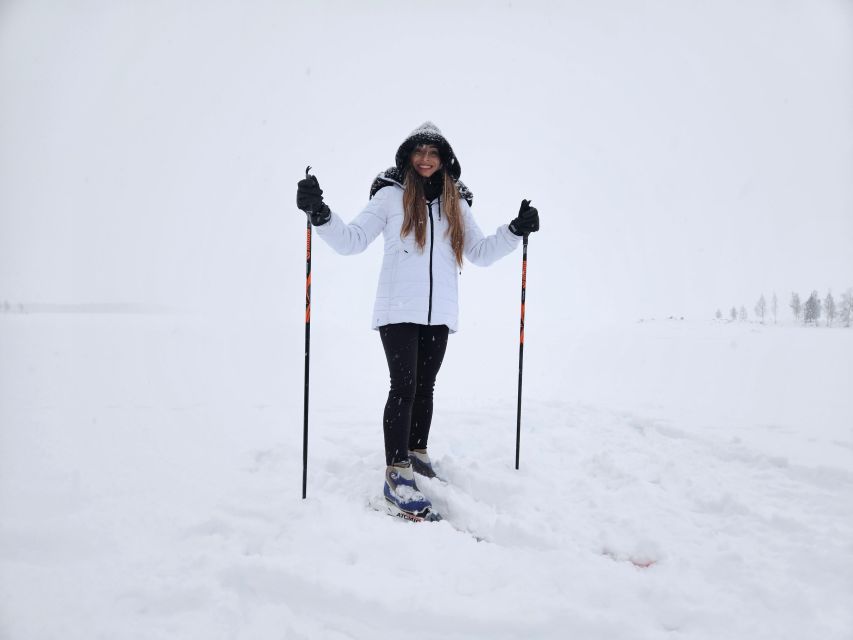
REVIEW · KEMI & SEA LAPLAND TOURS
Kemi: Finnish Sight-Skiing Experience in Lapland
Gliding on skis in Lapland is a fast way to get your bearings. In Kemi, you learn real Finnish cross-country skiing basics while following tracks near the Snow Castle and the water. It feels practical, outdoorsy, and very Northern.
What I like most is how the session starts with hands-on gear help and technique instruction right away. The other big win is the scenery, especially the winter look at the Lapland Sea along the route, so you’re not just doing laps in a flat field.
One consideration: it’s only about 2 hours, and the route can shift with weather, so if you want a long, guaranteed-distance trek, plan your expectations accordingly.
In This Review
- Key points to know before you go
- Entering Finnish skiing mode in Kemi
- Finding the session at the Snow Castle of Kemi (Lumilinnankatu 15a)
- Getting fitted and learning classic diagonal plus free skating
- Sauvosaari Sports Park tracks: where technique meets real winter
- The Snow Castle stop: quick, scenic, and useful for orientation
- Mansikkanokka Swimming Beach in winter: a quiet kind of dramatic
- Laitakari sightseeing stretch: the longest view window
- Why the 2 hours feel like a smart first step
- Clothing and comfort: what to bring so you can enjoy it
- Price and value: is $81 fair for this Lapland experience?
- Who should book, and who should skip it
- Should you book Kemi Finnish Sight-Skiing?
- FAQ
- Where is the meeting point for the Kemi sight-skiing experience?
- How long is the activity?
- What is included in the price?
- Do I need to bring thermal outdoor clothing?
- How much does it cost?
- What languages are the instructors?
- What skiing skills will I learn?
- What should I wear?
- Is this activity suitable for young children, wheelchair users, or older adults?
- Can the route or duration change due to weather?
- What is the cancellation policy?
Key points to know before you go
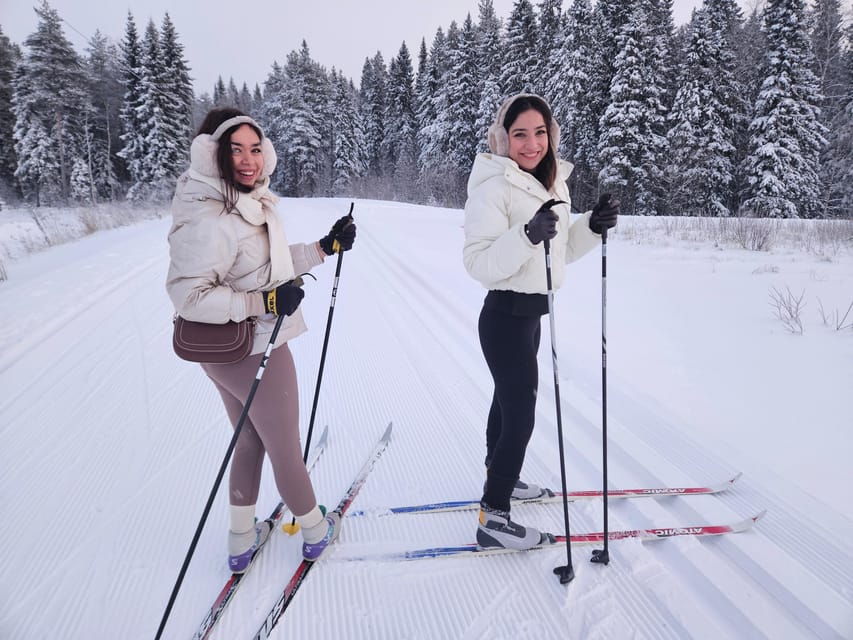
- Gear included: skis, poles, and boots, plus guidance on getting set up safely
- Beginner-friendly technique: you’ll practice classic diagonal and free skating moves
- Snow Castle start: a clear meeting point and an easy way to warm up mentally
- Lapland Sea views: the route is scenic, not just functional
- Pro coaching vibe: guides like Marko, Essi, and Samuel have been praised for patience and clarity
- Short and efficient: you’ll get the fundamentals fast, then spend time seeing winter Lapland
Down on the Bothnian coast, Sea Lapland has its own list
Entering Finnish skiing mode in Kemi
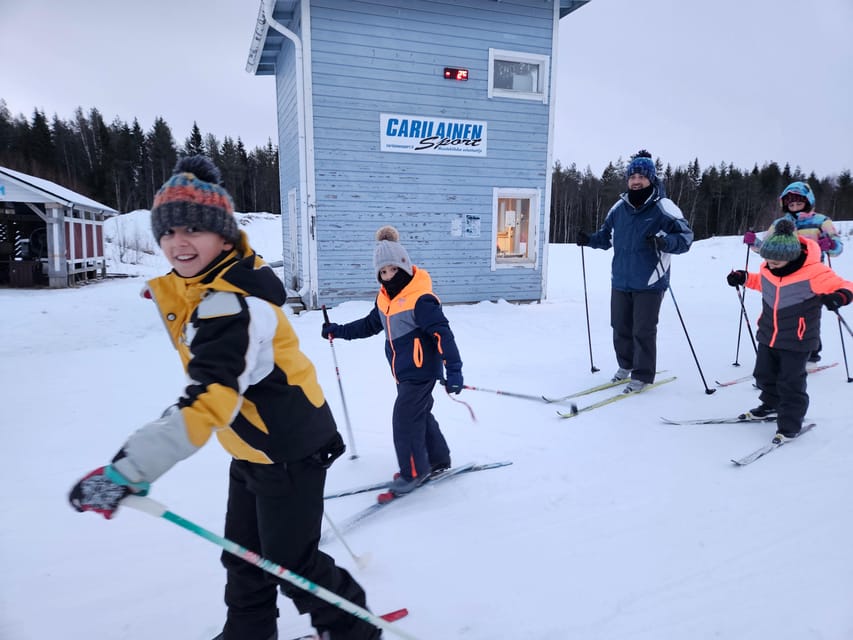
If you want one winter activity that feels like Finland, this is a strong pick. Cross-country skiing is not treated like a trendy sport here. It has been a day-to-day tool after heavy snowfalls, a way to reach school, work, and life itself. So when you put on skis in Kemi, it’s more than recreation, it’s a window into how people move through winter.
And Kemi has the right mix of “touristy enough” and “still outdoorsy.” You start at the Snow Castle area, so it’s easy to orient yourself, then you head out to the trails near Sauvosaari Sports Park for the actual skiing practice. Along the way, the route ties into real geography, including sights toward the Lapland Sea.
The energy is simple: learn, glide, look around, repeat. You’re not racing anyone. This is about control, comfort, and getting safe confidence before you try to push harder.
Finding the session at the Snow Castle of Kemi (Lumilinnankatu 15a)
Your meeting point is at the Snow Castle of Kemi, in the Experience 365 reception hall. The address used for the start is Lumilinnankatu 15a, which makes it straightforward to plug into your maps app.
I like this setup because it keeps the friction low. You’re not trying to locate a distant trailhead while you’re already bundled up and cold. You arrive, you’re guided to gear, and you’re in the right mindset quickly.
Before you move much, there’s a safety briefing, about 15 minutes. That matters. Cross-country skiing is mostly about technique, not toughness, but beginners still need the basics: how to stand, how to move safely in a group, and what to watch for on the track. If you’re the kind of person who worries about doing something wrong, this early coaching window usually helps a lot.
Getting fitted and learning classic diagonal plus free skating
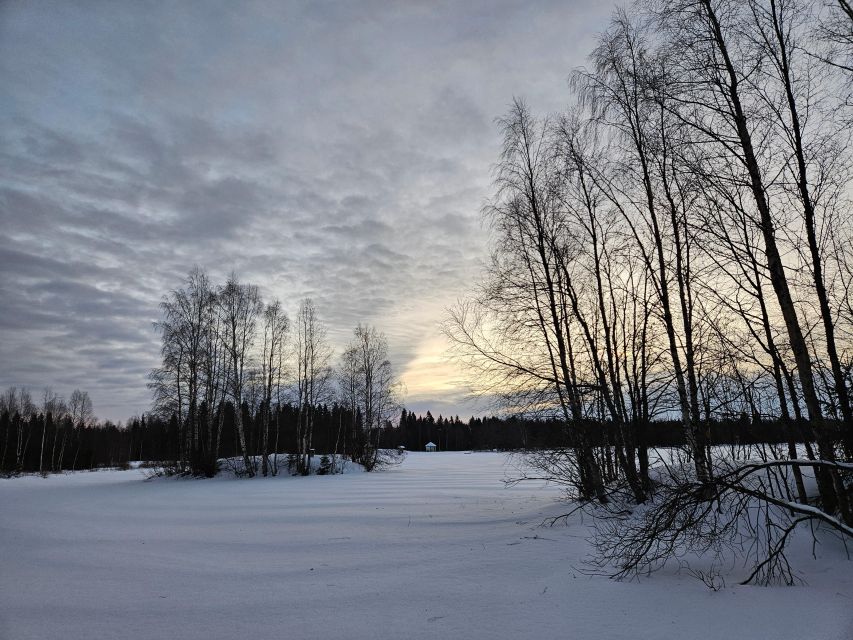
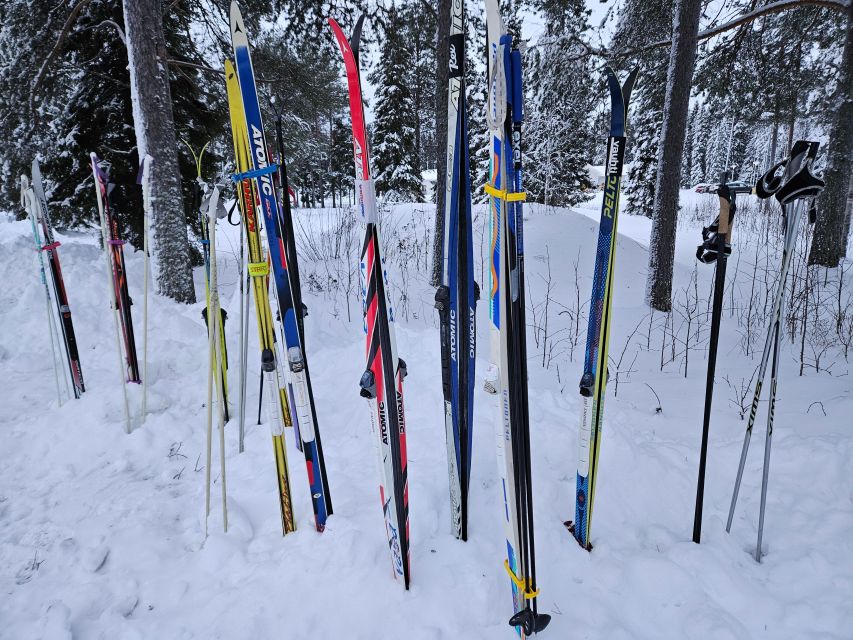
You’ll be set up with skis, poles, and ski boots. That’s a big value add, because boots and ski fit can make or break your experience. The guide checks that your equipment fits properly before you hit the tracks.
Then comes the teaching part, and it’s not just theory. You practice classic diagonal, which is the basic glide-and-step pattern most people start with in cross-country skiing. You also learn free skating technique, a more dynamic style that can feel more like a sideways push on skis.
Here’s the practical side: even if you’ve never skied before, these two techniques give you a quick skill range. You’ll understand how to keep your skis under you, how to use your poles without stabbing the air, and how to manage balance as you move.
From the way guides are described, the best instructors focus on calm, clear instructions. If you end up with Marko, Essi, or Samuel, you may notice that the coaching is patient and supportive, especially for first-timers. That matters because winter sports are intimidating when the signals are unclear.
Sauvosaari Sports Park tracks: where technique meets real winter
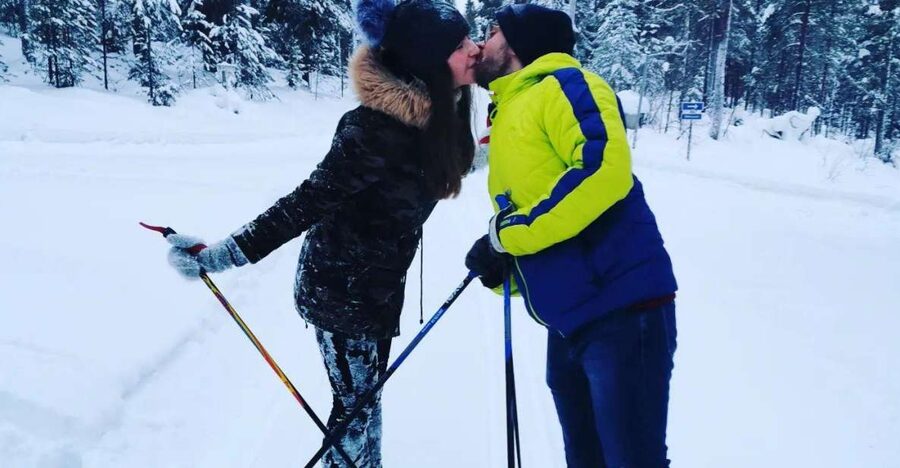
Once the gear checks and basics are done, you head onto the tracks of Sauvosaari Sports Park. This is where the experience shifts from classroom to action.
What makes this part worth your time is the balance of structure and scenery. You’re on groomed tracks, so you can actually practice diagonal and free skating without the chaos of random terrain. But you’re still outside in the Arctic atmosphere, with winter light doing its thing and the air feeling crisp for the whole group.
As a rule, I’d rather you learn on a controlled route first, then see the bigger views after. You get that order here: skills early, landscapes after.
Also, if your group includes different comfort levels, ask your guide how they plan the pacing. A helpful tip from past sessions is that the better the group, the further you might go, so it’s smart to check ahead if you want more distance or more time on the move.
- Kemi-Tornio: Ice Fishing Safari with Snowmobiles
★ 5.0 · 9 reviews - Kemi-Tornio: Nature tour with snowshoes
★ 4.2 · 4 reviews - Kemi-Tornio: Snowmobile Forest Safari w/ Hot Drink & Snacks
★ 5.0 · 3 reviews
The Snow Castle stop: quick, scenic, and useful for orientation
After the initial setup, you return to the Snow Castle area at the start of the activity timeline, where the safety briefing happens. Think of this as your anchor moment.
It’s not just a pretty backdrop. Starting here helps you orient quickly, and it keeps the whole session feeling organized. You know where you are, you know where you’ll end, and you can focus on learning rather than navigation.
If you’ve seen winter castles on photos, your instinct might be to treat them as the main event. Here, they are the launchpad. The real payoff comes once you’re moving through the tracks and later toward water views.
Mansikkanokka Swimming Beach in winter: a quiet kind of dramatic
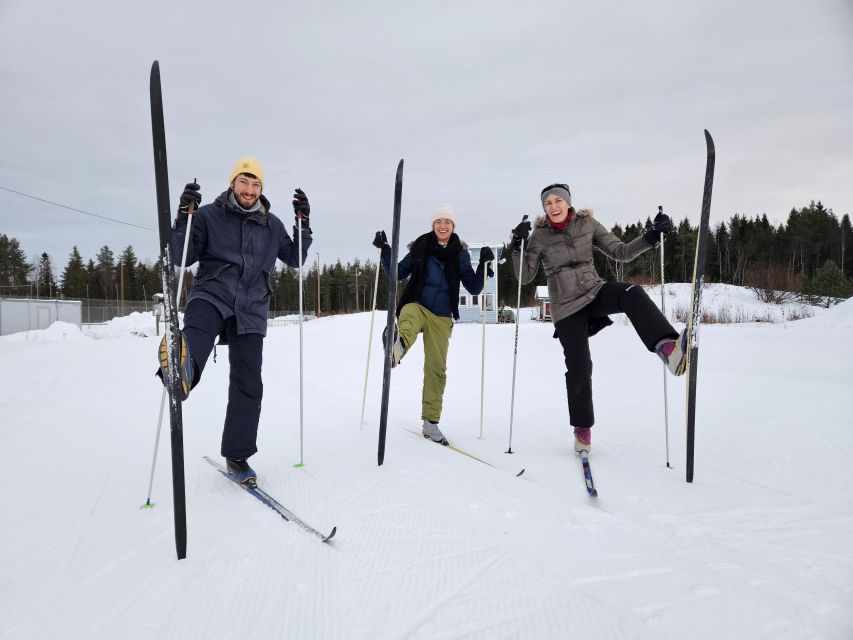
Next you’ll head to Mansikkanokka Swimming Beach for about 30 minutes of guided time. In summer, a swimming beach sounds like sun and swims. In winter, it becomes something else: open space, long sightlines, and a different kind of calm.
What I like about a stop like this is how it breaks up the ski practice. You’re not just repeating movement after movement. You get a scenic pause where you can actually look around, breathe, and let your legs recover a bit before the longer sightseeing stretch.
This is also where the Lapland vibe becomes tangible. Even if you don’t talk much, you’ll feel how the city and nature meet at the shoreline. The guide can point out what you’re looking at and help you understand why the route makes sense in winter.
One small drawback to keep in mind: on cold days, standing still even for 30 minutes can feel like a lot. Wear layers you can adjust. If you overheat on the early glide, you’ll want an easy way to vent.
Laitakari sightseeing stretch: the longest view window
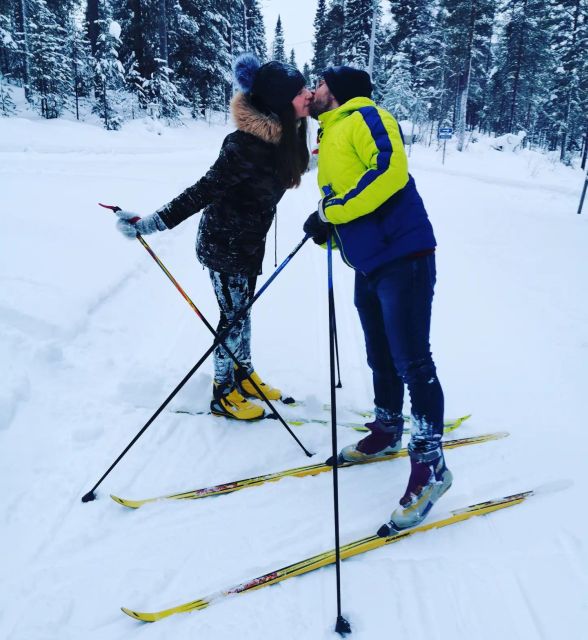
Laitakari is your main sightseeing block, about 1 hour. This is where the route leans into the “sight-skiing” idea, meaning you’re actively traveling, but you’re also looking.
I’m especially interested in this part because winter scenery is different from pretty postcard views. You’re seeing scale, distance, and stillness. When the route includes sights toward the Lapland Sea, the openness makes it feel even colder in a dramatic, beautiful way.
Practically, this hour is also good for skill use. By then, most beginners have figured out how to keep their balance enough to enjoy the ride. So the sightseeing isn’t separate from learning, it builds on it.
If you want photos, this is where you can actually slow down safely and frame shots. And if you need extra help, the guides often seem to anticipate it, based on how frequently first-timers talk about having support and help taking good pictures along the way.
Why the 2 hours feel like a smart first step
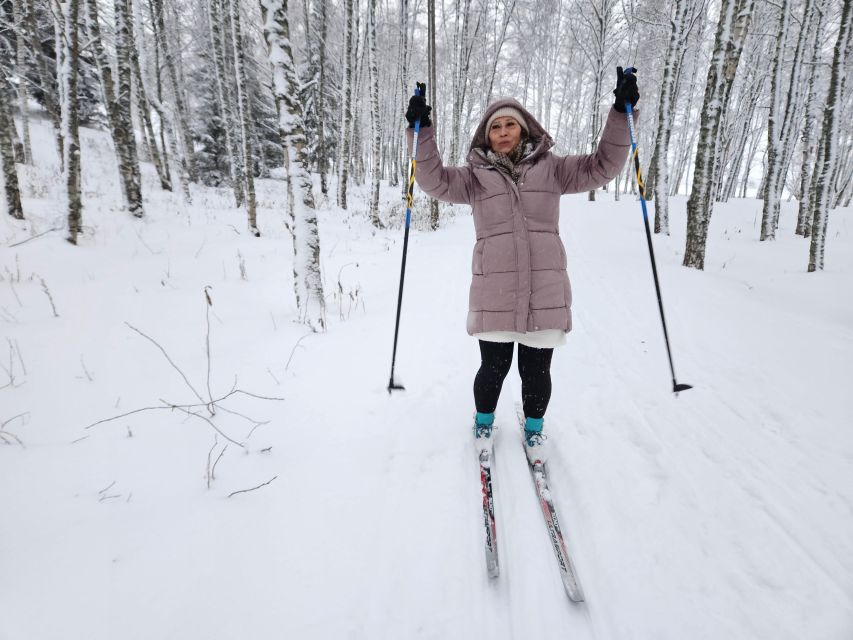
Two hours is short, but it’s not a gimmick. It’s long enough to teach real basics and short enough that you don’t end up exhausted, miserable, or frozen.
This is a key value point for $81 per person. You’re not paying just for someone to walk you onto skis. You’re paying for:
- gear you don’t have to source yourself
- a guide who teaches you technique, not only safety
- enough time to try moves like diagonal and free skating
- sightseeing stops that make the work feel worth it
If you try to learn cross-country skiing on your own in Lapland, the cost can actually be higher. You might rent gear, realize the fit is off, then spend the day frustrated. Here, the session is built to get you gliding with support fast.
Just remember the weather clause. Tours can change route and duration depending on conditions, so if the forecast is questionable, be ready for a slightly different plan. In winter, flexibility is part of the deal.
Clothing and comfort: what to bring so you can enjoy it
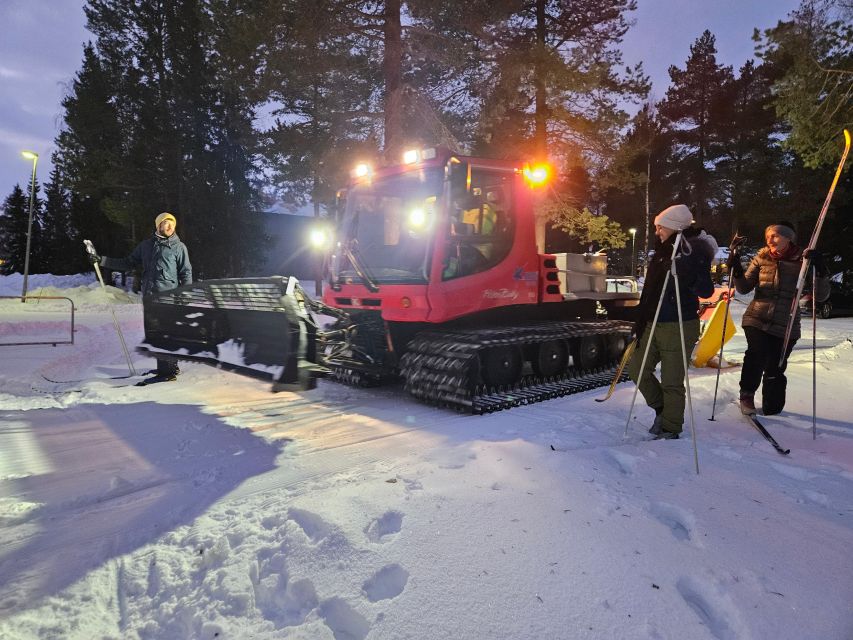
Thermal outdoor clothing is not included, so you need to plan for real winter comfort. The tour asks you to bring weather-appropriate clothing, which is the sensible standard, but it’s still on you to layer well.
I recommend dressing in layers you can regulate:
- warm base layer for heat control
- insulating mid-layer
- a windproof outer layer
- gloves that grip well for poles
- warm socks that match ski boots comfortably
The reason I’m picky here is simple. If you’re cold, you don’t learn. Your body tightens, your balance suffers, and the session becomes stressful instead of fun.
Also, if you think you’ll struggle with the cold while standing around, pack a way to manage it. A hat or hood matters. Even a small adjustment can keep your attention on the skiing, not on freezing.
Price and value: is $81 fair for this Lapland experience?
At $81 per person for a 2-hour guided session, this sits in the “reasonable for structured instruction” category. You’re getting skis, poles, boots, and technique instruction, which is the expensive part of figuring out skiing for the first time.
For me, the value isn’t only the total cost. It’s the time-to-skill ratio. You’ll learn foundational technique, practice it on real tracks, and still have time for sightseeing stops like Mansikkanokka Beach and Laitakari. That mix of movement plus scenery is what makes the session feel like more than an activity box-tick.
Could it be more expensive if you rented gear separately and then hired instruction later? Often yes. So even if you’re tempted to compare only the sticker price, compare the full cost of getting started correctly.
Who should book, and who should skip it
This experience is a great fit if you:
- are curious about Finnish winter travel and want an authentic way to experience it
- want beginner-friendly instruction with safety coaching
- like scenic outdoor activity rather than indoor sightseeing
- can handle cold weather standing and moving for about 2 hours
It’s not suitable for children under 5 years, pregnant women, wheelchair users, and people over 95 years. If you fall into one of those categories, it’s best to look for an alternative winter activity that matches your needs better.
If you’re an experienced skier, this still can work as a refresher and a different kind of outing, but it won’t feel like a long training session. It’s built for learning and sight-skiing, not for building race fitness.
Should you book Kemi Finnish Sight-Skiing?
Yes, if you want a first-time friendly way to learn cross-country basics in Lapland and you care about scenery, not just speed. The session structure is practical: gear fit, safety briefing, track skiing, then scenic stops. That flow reduces stress and helps you enjoy the learning curve.
I’d especially book it if you’re the type of traveler who likes guided context. Many guests have praised instructors like Marko for patient, clear teaching and a calm vibe for beginners. That kind of guidance makes a short 2-hour session feel worth it instead of overwhelming.
Skip it if you want a guaranteed long-distance trek or you’re worried about spending time outdoors in the cold. Weather can change routes, so bring flexible expectations and dress for comfort.
In short: if you want to leave Kemi feeling like you did something genuinely Northern, Finnish, and skill-building, this is an easy yes.
FAQ
Where is the meeting point for the Kemi sight-skiing experience?
You meet at the Snow Castle in Kemi, in the Experience 365 reception hall.
How long is the activity?
The duration is 2 hours.
What is included in the price?
Skis, poles, and ski boots are included, along with technique instruction.
Do I need to bring thermal outdoor clothing?
Thermal outdoor clothing is not included, so you should bring weather-appropriate clothing.
How much does it cost?
The price is listed as $81 per person.
What languages are the instructors?
The instructor languages are English and Finnish.
What skiing skills will I learn?
You can expect to learn ski moves such as classical diagonal and free skating, plus general technique for safe sight-skiing.
What should I wear?
Bring weather-appropriate clothing. Dressing for winter conditions is important since you’ll be outside during the full session.
Is this activity suitable for young children, wheelchair users, or older adults?
It is not suitable for children under 5 years, pregnant women, wheelchair users, or people over 95 years.
Can the route or duration change due to weather?
Yes. Tours are subject to change due to weather conditions, and the provider may change the route and duration without prior notice.
What is the cancellation policy?
Free cancellation is available up to 24 hours in advance for a full refund.
Sea Lapland: Kemi and Tornio
More Tour Reviews in Kemi
Latest from the Kemi notebook
- Kemi-Tornio: Snowmobile Forest Safari w/ Hot Drink & Snacks★ 5.0 · 3 reviews
- Kemi-Tornio: Nature tour with snowshoes★ 4.2 · 4 reviews
- Kemi-Tornio: Night Safari on Snowmobiles★ 4.5 · 9 reviews
- Kemi-Tornio: Ice Fishing Safari with Snowmobiles★ 5.0 · 9 reviews
- Kemi-Tornio: Husky Sled Ride with Hot Drink★ 4.8 · 17 reviews
- Kemi-Tornio: Starguaranteed Northern Lights Auroras★ 4.0 · 48 reviews
The rest of Kemi & Sea Lapland Tours.
 ★ 4.0Kemi-Tornio: Starguaranteed Northern Lights AurorasFrom $11248 reviews
 ★ 4.5Northern Lights Auroras from Kemi-Tornio with PickupFrom $11844 reviews
 ★ 5.0Icetrek to Old KemiFrom $5719 reviews
 ★ 4.8Kemi-Tornio: Husky Sled Ride with Hot DrinkFrom $22917 reviews
 ★ 5.0Ski or Snowshoe rental in Sea LaplandFrom $3510 reviews
 ★ 5.0Kemi-Tornio: Ice Fishing Safari with SnowmobilesFrom $1829 reviews
 ★ 4.5Kemi-Tornio: Night Safari on SnowmobilesFrom $1769 reviews
★ 5.0Icetrek to Old KemiFrom $587 reviews
★ 4.5Kemi-Tornio: Night Safari on SnowmobilesFrom $1769 reviews
★ 5.0Icetrek to Old KemiFrom $587 reviews
Where this one also turns up