

REVIEW · HELSINKI CITY TOURS
Helsinki Walking Tour With a Sociologist
Sociology in Helsinki, on foot. In about 3 hours, this small-group walk (up to 6 people) uses real public spaces to explain how Finland thinks and organizes everyday life, with stops that include Oodi Library and city-center landmarks. I love the small group feel because it makes questions easy, and I like how the guide ties architecture to how people live and govern. One thing to plan around: a couple of big churches are part of the route, but their entry tickets are not included, and the National Library and Old Market Hall have weekend closures.
You’ll get a focused route through central Helsinki, guided in English by a local, with a mobile ticket and no long transport breaks. My only caution is timing: if you hit the tour on a Saturday, Sunday, or right around museum hours, you may see exterior views instead of entry at a few stops.
In This Review
- Key things that make this tour worth your time
- How a sociologist reads Helsinki in 3 hours
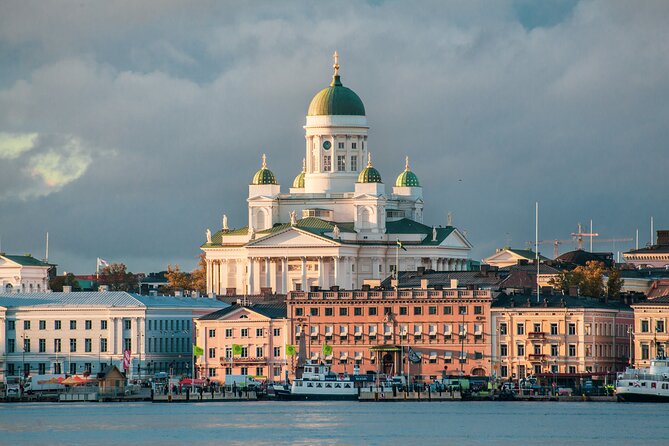
- Senate Square and the start of modern Helsinki
- Helsinki Cathedral and Uspenski Cathedral, what’s included and what isn’t
- The National Library of Finland: public space that feels like civic pride
- Helsinki City Museum, where local identity gets explained
- Presidential Palace and Parliament House: democracy you can walk to
- Kauppatori and the Old Market Hall: how Helsinki eats and trades
- Esplanadi, Lasipalatsi, and the city’s design heartbeat
- Kiasma and Ateneum: modern and classic Finnish art stops
- Central Railway Station and four massive statues
- Oodi Central Library: why this stop gets called the highlight
- What it costs, and whether it’s good value
- Group size, pace, and how to decide if it fits you
- When should you book this walking tour?
Key things that make this tour worth your time
- A guide who connects buildings to Finnish society, not just postcards
- Small group size (max 6) for questions and slower pacing
- Several library and civic spaces, including Oodi Central Library as a highlight
- Central sights with practical context, from democracy to markets
- Church stops where tickets are separate, so you can budget correctly
- Weekend closures to watch, especially the National Library (Sat and Sun) and Old Market Hall (Sundays)
Back in the capital, these Helsinki walks earned their stars
How a sociologist reads Helsinki in 3 hours

Helsinki is one of those cities where the “big story” shows up in plain sight. This tour leans into that. Instead of sprinting from one monument to another, you’re walking through places that shape social life: civic squares, government buildings, churches, marketplaces, and public libraries.
The value here is that you get an explanation for what you’re seeing. In a city with modern design, ocean breezes, and very practical planning, it helps to have someone point out patterns you’d otherwise miss, like how public institutions feel open and how language and culture show up in street life. If you like understanding the why behind the what, this kind of walk usually lands well.
And because it’s capped at 6 people, the guide can adjust on the fly. If you care more about politics, you’ll get that. If you’re more interested in day-to-day culture and public spaces, you’ll get that too.
Senate Square and the start of modern Helsinki
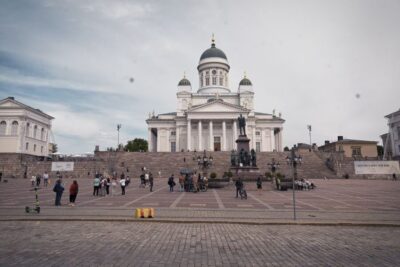
You begin at Senate Square, Helsinki’s best-known civic stage. It’s the place where the city’s “modern” storyline begins, and you get to orient quickly because the square acts like a visual map. The guide focuses on the three prominent buildings around you, and the point is less about memorizing names and more about understanding why those buildings matter to how Helsinki developed.
This is also a good stop for photos, but don’t rush it. The square works best when you look up, then step back and compare the spacing and symmetry. That’s where the story clicks: the layout isn’t random, it reflects how power and education were meant to look in public.
This part is mostly about viewing and learning, so it’s low stress. It also sets up the rest of the walk, because you start noticing civic design choices again and again.
Helsinki Cathedral and Uspenski Cathedral, what’s included and what isn’t
From the square, you move to Helsinki Cathedral, the most famous landmark in town. You’ll even enter together, which is a big plus if you want more than exterior photos. One caution: admission is not included here, so bring money or be ready to pay separately.
Then later on, you’ll hit Uspenski Cathedral, completed in 1868 and described as the biggest and most known Russian Orthodox church in Helsinki. This stop is short but memorable because the Russian Orthodox style reads clearly even if you’re not religious. It also helps you understand Helsinki as a crossroads city, not only a modern Nordic postcard.
Same budgeting note applies: Uspenski Cathedral admission is also not included.
Practical tip: if you’re the type who hates standing in line, arrive calm. You’re in a walking route, so there isn’t time for detours, and church entry often has its own rhythm. Plan to dress respectfully, especially inside.
The National Library of Finland: public space that feels like civic pride
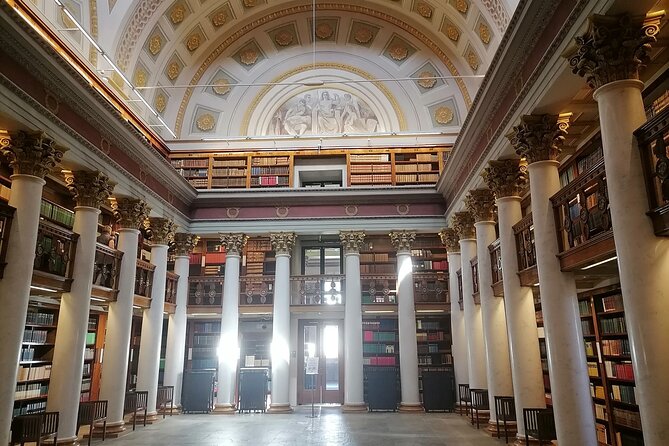
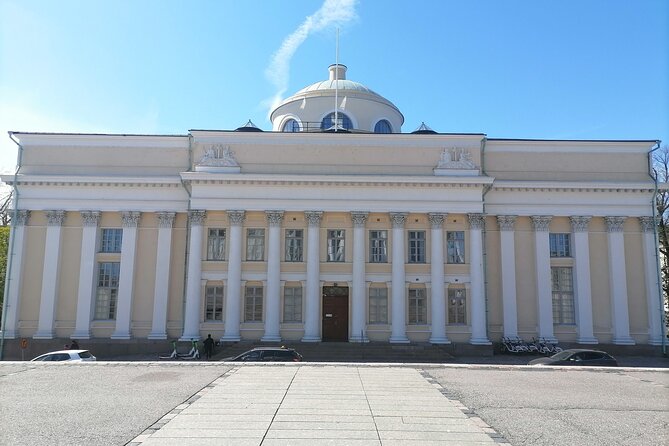
Next up is the National Library of Finland, widely considered one of the most beautiful buildings in Helsinki. This stop is a real win because the tour treats libraries as social spaces, not quiet background scenery. It’s a free admission stop, so you’re not paying extra to enjoy the building and the atmosphere.
There’s one major scheduling consideration: the National Library is closed on Saturday and Sunday. If you’re traveling on a weekend, check the day before you rely on this being an interior stop. On those days, you may get less than you hoped, even though the exterior still looks great.
Why I like this stop for first-time visitors is simple: libraries tell you what a society values. You’ll get that message in the architecture, in how people use the space, and in the fact that it’s part of public life.
On foot is usually best. More Helsinki walks
- Epic Helsinki: English Speaking Walking Tour
★ 4.9 · 192 reviews - Helsinki walking tour with a city planner
★ 5.0 · 175 reviews - Helsinki Walking Tour – Small Group
★ 5.0 · 155 reviews - Helsinki: Small-Group Walking Tour with City Planner Guide
★ 5.0 · 91 reviews - Helsinki: Private Walking Tour with a Local Guide
★ 4.7 · 87 reviews
Helsinki City Museum, where local identity gets explained

After the library stop, the tour shifts to cultural-historic venues, including a visit to the Helsinki City Museum. This is where the walk starts to feel more like a guided course. You’re connecting what you’ve seen in the street to how Helsinki tells its own story: identity, heritage, and everyday culture.
This part works well if you’re curious about how a place explains itself. You don’t need a deep background in Finnish history. You just need the willingness to notice themes and have someone translate them into something you can feel in the streets.
If you prefer only outdoors sightseeing, you might find this indoor element takes energy. But it’s short and it gives you context for why the next civic and art stops look the way they do.
Presidential Palace and Parliament House: democracy you can walk to

One of the strongest theme threads on this walk is government as a physical environment. You’ll see the Presidential Palace, described as a symbol of Finnish democracy and political history, located on Pohjoisesplanadi Street. Admission is free, so it’s mostly about learning from the setting and what it represents.
Later, the route also points you toward the Parliament House, framed as the heart of Finnish democracy where important decisions and debates happen. Even with limited time, the guide’s job is to connect the institutions to the street: why they sit where they do, what public access feels like, and how Finland’s civic culture shapes daily life.
I like these stops because they prevent the classic Helsinki mistake: treating the city like it’s only design and sea views. You get a more complete picture, and it doesn’t feel heavy. It’s still a walking tour, just with sharper meaning.
Kauppatori and the Old Market Hall: how Helsinki eats and trades

Now you move from politics to daily life at Kauppatori, Helsinki’s market square area. The tour gives you time to explore and learn about the area’s history. This stop is a practical reminder that markets are not only for souvenirs. They’re about how locals gather, how food culture travels, and how the city relates to the harbor.
Then you’ll reach the Old Market Hall (Vanha Kauppahalli), opened in 1889 near the South Harbor. Admission is free, but there’s an important note: it’s closed on Sundays. Inside, you can expect stalls selling fresh local produce and Finnish specialties like smoked salmon, reindeer meat, and traditional pastries, plus handicrafts and souvenirs.
Even if you don’t plan to buy much, this stop is worth slowing down in. You’ll see how many of the city’s culinary favorites are built for cold-weather living and long storage. That’s the kind of detail you usually only pick up when someone helps you interpret the market scene.
If you’re planning meals around this tour, remember food is not included, so treat it as a taste-and-sniff stop unless you’ve budgeted for snacks.
Esplanadi, Lasipalatsi, and the city’s design heartbeat
At Esplanadi, you’re on the main boulevard of Helsinki, often described as the heart of city life all year around. This is where the walk starts feeling like a stroll, but it still matters. The guide uses the boulevard to explain how public space works in Helsinki: where people linger, where they meet, and how movement through the city feels.
Then comes Lasipalatsi, also known as the Glass Palace. The architecture is the star: unique glass facades and a design that’s meant to be seen from multiple angles. The tour also connects it to the performing arts, noting it’s home to renowned Finnish orchestras, concerts, and performances. That detail makes the building feel less like a pretty object and more like a functioning cultural hub.
If you like design, take an extra minute to look at how the light changes across the glass. It’s a small thing, but it makes the architecture feel less abstract.
Kiasma and Ateneum: modern and classic Finnish art stops
Art is part of the story here, with multiple stops. You’ll spend time with the contemporary side at Kiasma, Finland’s premier modern art museum. The route also touches on the Swedish-speaking community’s art scenes, which is a helpful reminder that language and culture are part of Helsinki’s identity.
Later, you’ll reach Ateneum, described as the country’s national gallery. This gives you a classical counterpoint after modern art. Even if you don’t go inside, it helps to frame Helsinki’s art scene across time, so your photos and impressions feel connected rather than random.
One practical point: the provided information highlights free entry for some stops, but it doesn’t clearly state ticket status for Kiasma or Ateneum. So budget time for potential ticketing, or at minimum be ready for “look from outside” if your schedule or costs don’t match.
Central Railway Station and four massive statues
Next is Helsinki Central Railway Station, a major landmark in the city center, guarded by four massive statues. This stop is brief, but it’s useful because it marks the shift from sightseeing to navigation. If you want to travel around Finland afterward, this is one of the places you’ll return to, so it helps to understand the station’s importance in the city’s layout.
Think of it as the “anchor” stop. You’ll notice the station’s presence in your sense of direction for the rest of your days in Helsinki.
Oodi Central Library: why this stop gets called the highlight
The walk ends at Oodi Central Library, framed as the highlight of the tour and described as a place that changes your definition of what a library can be. Admission is listed as free, and you’ll have around 20 minutes to take it in.
This is the stop that usually lands best for people who like to see how a society organizes learning and community. Oodi is not presented as a dusty room of books. It’s treated as a public living room: meeting space, shared services, and community-oriented design.
If you’re a book person, you’ll love it. If you’re not, you’ll still get something out of it because the building itself is the lesson. It’s an easy way to end the tour with a place that feels current and practical.
And because the tour ends right at Oodi, you can naturally transition to a café, a rest break, or your next neighborhood.
What it costs, and whether it’s good value
This tour runs about 3 hours and costs $57.67 per person. For that price, you get a local guide and a tight route through central Helsinki’s most important civic, cultural, and design stops.
You’re paying mainly for interpretation and pacing. You could do the same sights on your own, but you’d miss the connective tissue: how the guide reads architecture, institutions, and public spaces as a system. In other words, the value isn’t just in where you go, it’s in how you understand what you’re looking at while you walk.
There are also cost variables to plan for. Helsinki Cathedral and Uspenski Cathedral tickets are not included, so factor in separate entry fees if you want the full experience inside the churches. Some stops are clearly marked free in the provided details, including Senate Square viewpoints, National Library of Finland, Presidential Palace, Kauppatori, Old Market Hall, and Oodi Central Library.
Food is not included, so if you plan to snack at the market area, treat it as spending you’d do anyway.
Group size, pace, and how to decide if it fits you
This experience caps at 6 travelers and is offered in English. It’s listed as suitable for most people, and service animals are allowed. The tour is near public transportation, which helps if you want an easy arrival or an easy retreat if weather turns.
Pacing matters for a walking tour. You’re not seeing Helsinki from a car window, so you should expect steady walking and quick stop times like 5 to 20 minutes at each site. If you like slow museum wandering, this won’t replace a museum day. If you like structured orientation plus cultural context, it’s a strong fit.
I’d especially recommend it if:
- You want a first-time Helsinki overview that includes politics, not only scenery
- You like learning about how public spaces shape everyday life
- You enjoy architecture when someone explains why it looks the way it does
- You prefer small-group conversation over a loud bus tour
When should you book this walking tour?
Book it when you want an efficient, meaning-heavy introduction to Helsinki. This is a great “set your bearings” experience, especially if you’re the kind of traveler who asks why things are arranged the way they are.
Hold off or plan extra if your dates fall on Saturday or Sunday, because the National Library is closed on both days. Also remember Old Market Hall is closed on Sundays. If you’re set on church interiors, budget for separate tickets since Helsinki Cathedral and Uspenski Cathedral entry are listed as not included.
If you want a guided day that mixes civic life, art, and libraries into one walkable route, this one makes a lot of sense.
More Tours in Helsinki
Still in Helsinki? Keep Walking
More Tour Reviews in Helsinki
Latest from the Helsinki notebook
- Winter kayaking in Eastern Helsinki archipelago★ 5.0 · 3 reviews
- Private Porvoo Tour & Visit Runeberg’s National Poet House★ 5.0 · 3 reviews
- The Instagrammable Places of Helsinki with a Local★ 5.0 · 3 reviews
- Redrib sunset lounge experience★ 5.0 · 3 reviews
- Turku tour from Helsinki★ 3.5 · 3 reviews
- Helsinki City 3-Hour Kayak Trip★ 5.0 · 3 reviews
The rest of Helsinki City Tours.
 ★ 4.5Helsinki: Sightseeing Canal Cruise with Audio CommentaryFrom $331,299 reviews
 ★ 5.0A Finntastic Walking Tour in HelsinkiFrom $24700 reviews
 ★ 4.8From Helsinki: Nuuksio National Park Half-Day TripFrom $66688 reviews
 ★ 4.2Helsinki: Hop-On Hop-Off City Bus TourFrom $42585 reviews
 ★ 4.3Helsinki: Bus Tour with Audio GuideFrom $41544 reviews
 ★ 4.3Helsinki: Evening Archipelago CruiseFrom $30468 reviews
 ★ 4.4Helsinki Archipelago: Sightseeing Boat TourFrom $33436 reviews
 ★ 4.3Helsinki: Temppeliaukio Church Entrance TicketFrom $9421 reviews
Where this one also turns up