
REVIEW · HELSINKI CITY TOURS
Helsinki: Small-Group Walking Tour with City Planner Guide
Helsinki makes more sense when someone plans it for you. This small-group walking tour with city planner guide Emek turns major landmarks into real stories, from medieval plague-era clues to Lenin’s early 1900s Helsinki connection. I love the tight, personal group size and the way you can ask questions as you go. I also like that you get both big sights and everyday city planning context. One drawback to plan for, you will walk quite a bit, up to 6 km, in all weather.
You’ll cover central Helsinki at a calm pace, with frequent stops and time to warm up inside some buildings. In the early part of the walk you’ll see the famous center set pieces, then you’ll work outward through markets, libraries, churches, parks, and modern culture spots, before finishing back at Helsinki Central Station. It’s English-language and designed for Q&A, not a lecture you have to endure standing in the rain.
Bring real walking gear. Comfortable shoes, warm layers, and an umbrella matter here, since tours run rain or shine and the itinerary flexes with holidays and events.
In This Review
- Key things I’d watch for on this Helsinki planner walk
- A city planner guide turns Helsinki landmarks into a map you can keep
- Getting your bearings: starting in central Helsinki, then locking onto Senate Square
- Senate Square to Helsinki Cathedral: power, faith, and public space you can feel
- Uspenski Cathedral and the Russian thread in Helsinki’s city core
- President’s Palace pass by: what you learn without spending forever there
- Market Square and Market Hall: where city planning meets daily life
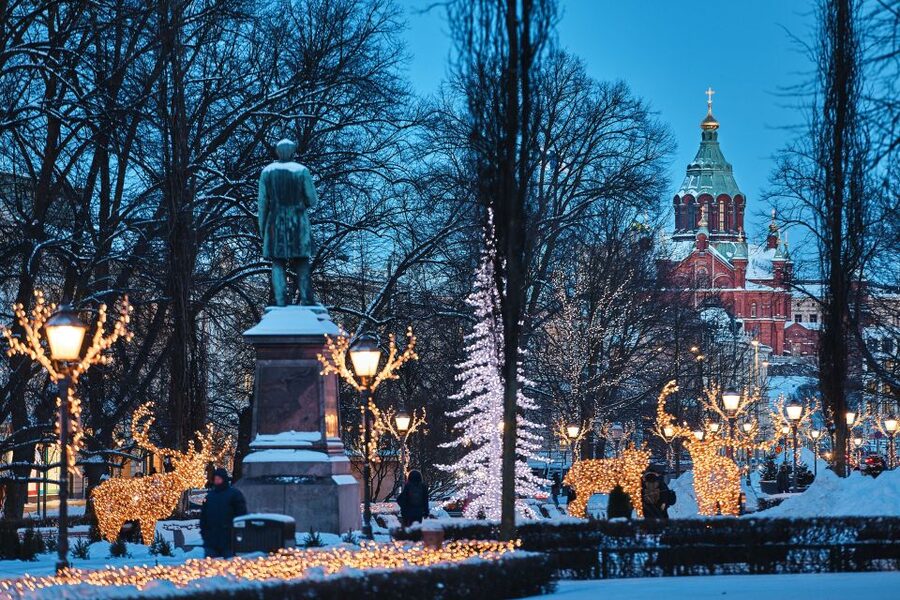
- Esplanadi, Runeberg’s memorial, Kappeli, and Old Church Park: public life in a walking loop
- From Central Railway Station to Kiasma and Musiikkitalo: the city’s rhythm between eras
- Oodi: the stop that makes modern Helsinki feel human
- Lasipalatsi to Kamppi Chapel to Amos Rex: the modern walk finish that still feels connected
- Ending at Helsinki Central Station: why the finish point is a smart move
- Price and value: does $58 per person make sense for 3 hours?
- Pace, comfort, and what to bring so you can enjoy the whole loop
- Who should book this Helsinki small-group walk with Emek?
- Should you book this tour?
- FAQ
- How long is the Helsinki small-group walking tour?
- What does the tour cost?
- How far will I walk?
- Where do I meet the guide?
- Which sights are included?
- Is the tour in English?
- What is the weather like for this tour?
- What should I bring?
- Is it wheelchair accessible?
- Are food and drinks included?
Key things I’d watch for on this Helsinki planner walk
- Small-group feel with lots of discussion time, so the tour fits questions, not just sightseeing.
- City planning perspective, where buildings and streets get explained as part of how Helsinki works.
- Major landmarks plus practical orientation, including Senate Square, Helsinki Cathedral, Uspenski Cathedral, and Oodi.
- Stops that mix old and new Helsinki, from church parks and memorials to Central Library Oodi and Amos Rex.
- No rushing to the next photo, with a paced route that still hits a lot in 3 hours.
Back in the capital, these Helsinki walks earned their stars
A city planner guide turns Helsinki landmarks into a map you can keep

If you’ve ever stared at Helsinki’s highlights and thought, cool, but why are they here, this tour targets that exact question. A city planner’s brain helps you connect streets, civic buildings, and public spaces into one big story about how a city decides what matters. That’s the heart of the experience.
I also like the guide-led conversation style. You’re not stuck listening through a foggy commentary. The tour is built around Q&A, so if you wonder why a certain statue is placed where it is, or how different communities coexist in the city, you can ask on the spot and get a direct answer.
And because it’s small-group, you avoid that awkward feeling of being herded. The pace stays human, and the guide can adjust explanations to your interests. One review noted how the guide can run the walk without annoying microphones and earphones, which I appreciate because it keeps the whole thing more natural, like you’re walking and talking with a local friend who happens to know the city planning details.
Getting your bearings: starting in central Helsinki, then locking onto Senate Square
Depending on what you book, you start either at Aleksanterinkatu 9 in the Nanso Kluuvin Kulma area, or at Senate Square itself. Either way, you’re placed right in the center, which is ideal if you have only a short time in Helsinki and want a first-time orientation you can actually use later.
From the start, the route quickly sets up the tour’s main theme: Helsinki’s identity is layered. It’s not just one style of architecture or one historical thread. The guide ties older events to what you see today, including stories like the medieval plague and Lenin’s stay in the early 1900s. Even if you already know a few names, the planner framing helps those stories connect to street-level reality.
Then you hit Senate Square for a guided visit, and this is where you start building a mental map. You’ll also get guided context so you understand what you’re looking at, instead of just collecting postcards. If you’re the kind of person who likes to know why a place is important, this stop sets the tone fast.
Senate Square to Helsinki Cathedral: power, faith, and public space you can feel

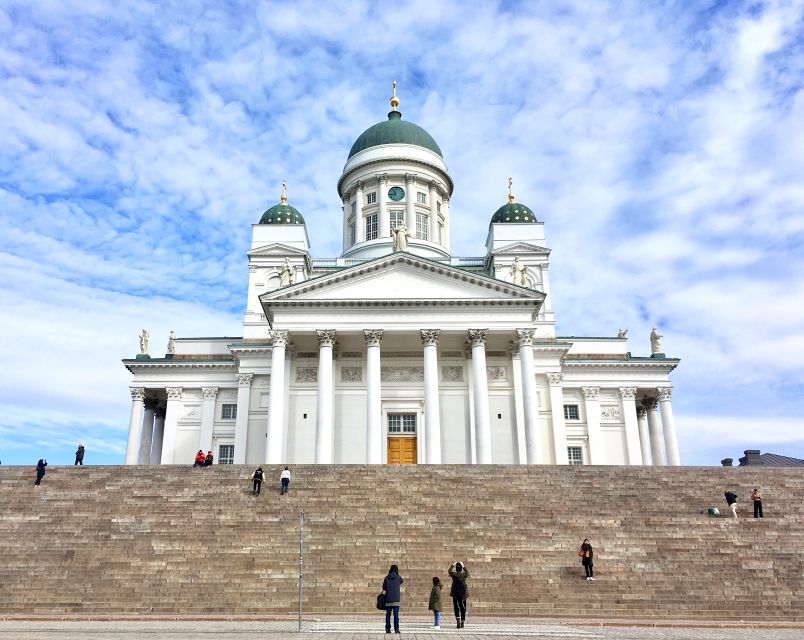
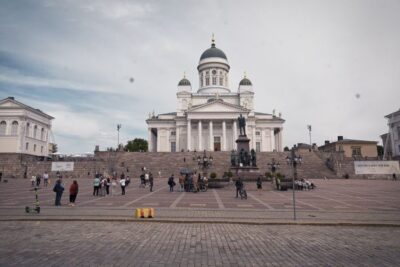
Senate Square and Helsinki Cathedral are the kind of landmark pairing that makes a city look official, structured, and intentional. But the tour does not treat them like just two monuments. The guide focuses on how central space works, who it serves, and why it became the showpiece area.
Helsinki Cathedral gets a short guided visit too, which is perfect because you get time to look around without turning it into a long stop that drains your energy. The most useful part here is the way the guide connects civic space to cultural space. In other words, you start seeing Helsinki as planned, not random.
One practical tip: this is a good section for photo timing. If your weather is unpredictable, you might get clearer views at one of the two main viewpoints in this area. Keep your umbrella handy, but also keep your phone or camera protected. You’ll be outside enough that you’ll feel the wind if you don’t plan for it.
Uspenski Cathedral and the Russian thread in Helsinki’s city core
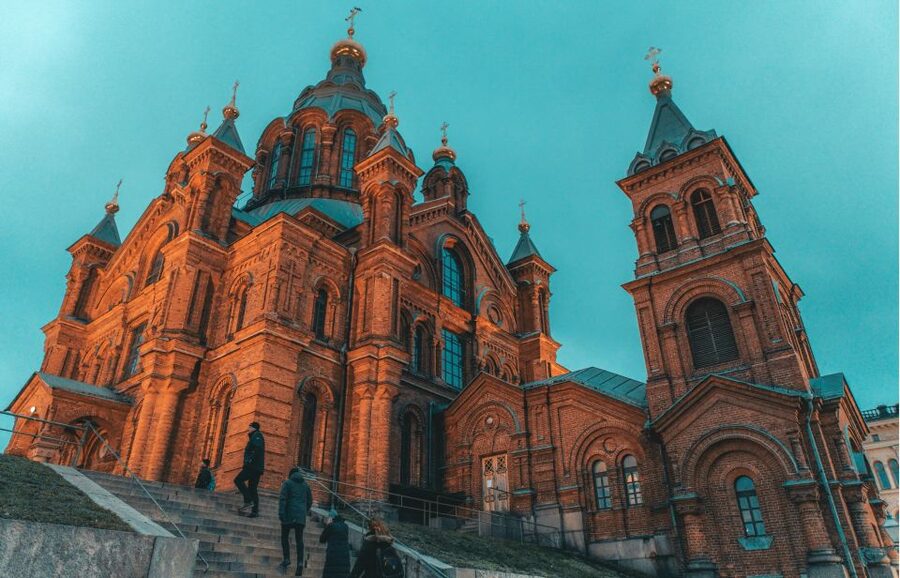
Uspenski Cathedral is a major stop on this walk, with dedicated time to visit. It’s also one of the places where the tour’s historical and social context becomes especially concrete. The guide specifically covers why an Orthodox cathedral exists in Helsinki, and why you can spot signs of Russian influence in the city.
You’ll also hear about a Russian Tsar statue standing in the middle of town. That detail matters because it’s easy to miss the larger meaning when you’re only looking at the buildings. The guide helps you interpret what those symbols mean in Helsinki’s history and identity.
This is also a section where questions are likely to pop up. If you’ve ever wondered how multiple influences fit into one modern capital, ask. The best part of this tour is that the guide can answer directly in English while you’re standing in the exact spot where the story connects.
On foot is usually best. More Helsinki walks
- Epic Helsinki: English Speaking Walking Tour
★ 4.9 · 192 reviews - Helsinki walking tour with a city planner
★ 5.0 · 175 reviews - Helsinki Walking Tour – Small Group
★ 5.0 · 155 reviews - Helsinki: Small-Group Walking Tour with City Planner Guide
★ 5.0 · 91 reviews - Helsinki: Private Walking Tour with a Local Guide
★ 4.7 · 87 reviews
President’s Palace pass by: what you learn without spending forever there

You’ll pass by the Presidential Palace, so you do not linger, but you still get context. This is a smart pacing choice for a 3-hour walk. You get the civic landmark moment without letting one stop eat the entire schedule.
The value here is the guide’s framing. He connects political authority to the city’s structure and to what people experience in everyday life. Even if you’re not a political history person, this kind of explanation helps you understand why Helsinki centers its grand civic scenes where it does.
If you’re curious, this is also a fine time to ask about how Helsinki’s planning decisions reflect social priorities. The tour is built for those questions.
Market Square and Market Hall: where city planning meets daily life
Market Square and Market Hall are a big chunk of the route, and that’s on purpose. After the major civic and religious landmarks, the markets pull you into practical, everyday Helsinki. Even though you’re walking, you get a sense of how public spaces support regular routines.
Market Square gets a shorter visit, then Market Hall adds a bit more time. In a short tour like this, I like that you do both. You get the “open air” vibe at Market Square, then you can warm up and slow down a little inside the Market Hall setting.
The planning guide angle helps here too. You don’t just see a place where people buy stuff. You see how a city organizes food, movement, and gathering. You also learn how older layers of Helsinki life still show up in the kinds of public spaces people use today.
Esplanadi, Runeberg’s memorial, Kappeli, and Old Church Park: public life in a walking loop

Esplanadi is one of those Helsinki stretches that feels like a spine through the city center, a place people naturally pass through. On this tour, it’s not just a stroll. You’re guided through the space with stops that add texture and story.
You’ll visit Johan Ludvig Runeberg’s memorial, pass by Swedish Theatre, and include time around Kappeli and Old Church Park. This is an excellent segment if you like the mix of formal and casual. Memorials and theatres give you the cultural layer, while the park areas help you understand how the city treats outdoor public time as part of normal life.
Old Church Park also fits the tour’s specific storytelling hooks. The guide covers why Helsinkians picnic at an old burial site. That’s the kind of detail that changes how you look at a park. Instead of seeing it only as green space, you start seeing it as part of the city’s long memory.
If you’re visiting in winter or shoulder season, this section can be more comfortable than you’d think because you’re constantly moving between stops. Still, keep your layers on. Helsinki can feel cold fast when you stop for photos too long.
From Central Railway Station to Kiasma and Musiikkitalo: the city’s rhythm between eras
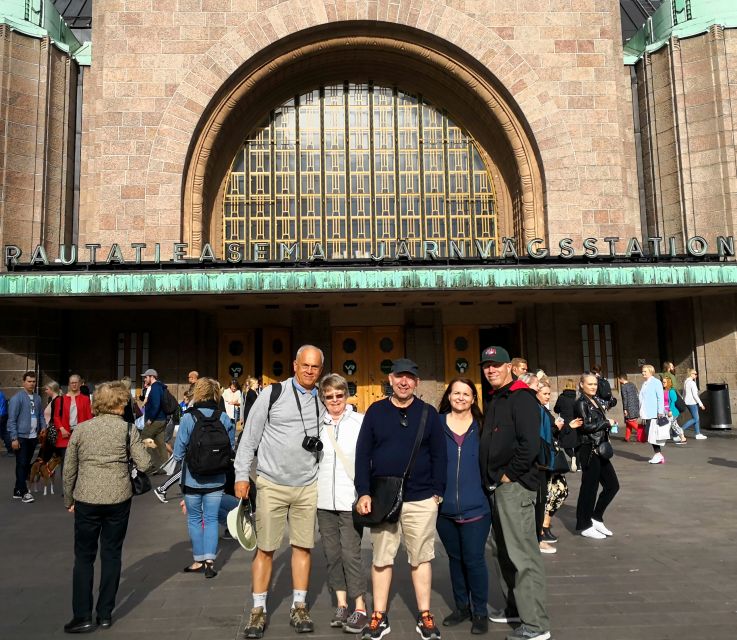
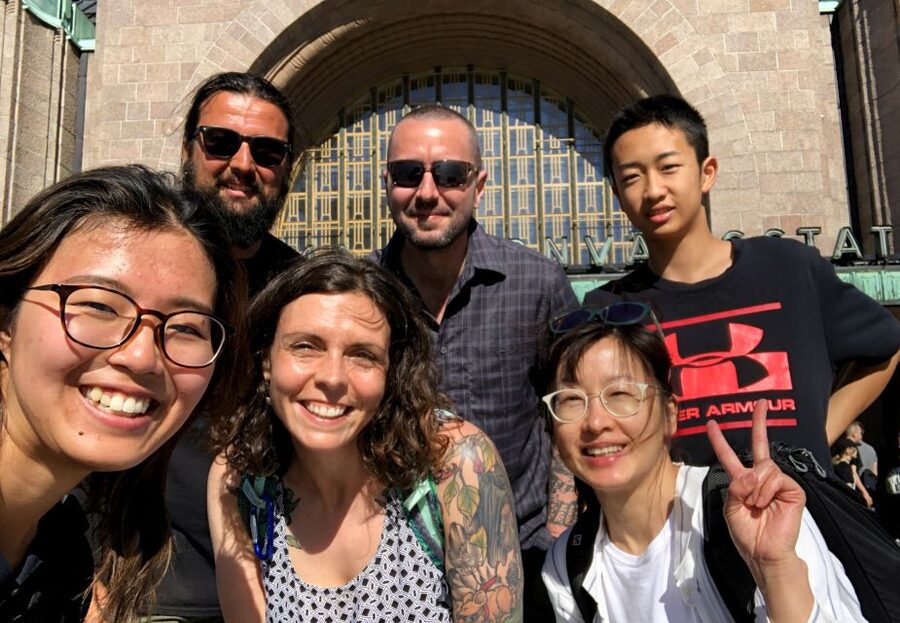
You’ll visit Helsinki Central Station. It’s a practical anchor point, and the guided time helps you read the station as more than transport. The guide uses big civic architecture as a way to explain how Helsinki moves people and how public buildings support the day-to-day rhythm of a modern city.
Then you pass by a few landmark cultural stops, including Museum of Contemporary Art Kiasma, Kansalaistori, and Musiikkitalo. These are quick passes, but they matter because they show you Helsinki’s range. You’re not only seeing a historic core. You’re seeing how the city places contemporary life alongside older identity markers.
If you like art and architecture, don’t worry about the short passes. A good city-planning guide helps you connect what you’re seeing to how the city prioritizes different types of public experience, not just aesthetics.
Oodi: the stop that makes modern Helsinki feel human
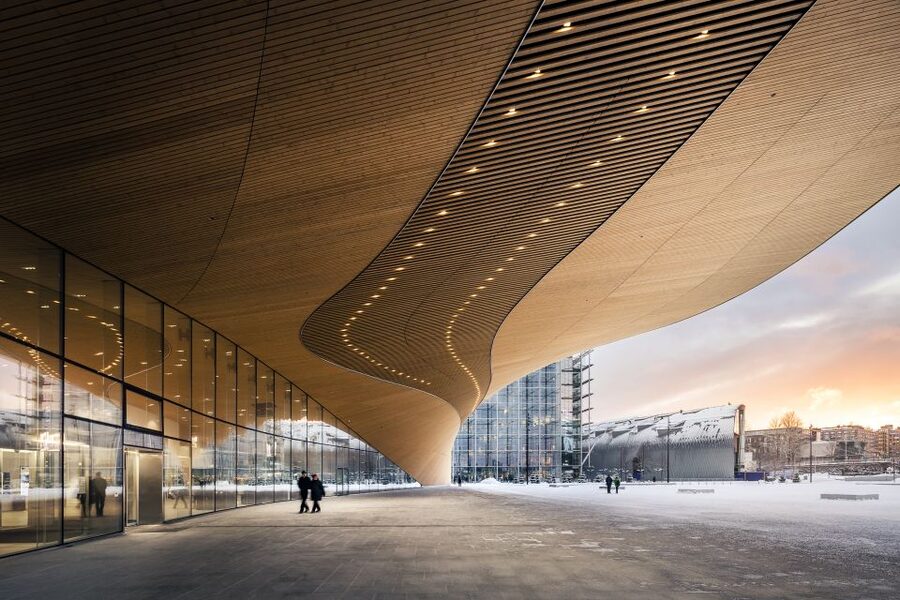
Central library Oodi gets real visit time. For many people, this is the highlight moment that makes the tour feel complete, because it’s where modern public life is visible in a single building. You get to step inside and understand why public libraries matter as civic space, not just a place to borrow books.
The guide explains the city’s values through the way public institutions are designed and used. That’s why Oodi lands so well after all the earlier stops. You’ve already learned how the city handles identity, politics, and religious influences. Now you get to see how the city shapes learning, gathering, and everyday services in the present.
If you’re traveling with family, this stop is also a strong energy reset. You get a break from the outside cold, and the building itself provides a natural moment to slow down. In one account, a family group was able to keep everyone engaged without losing the adult-focused explanations, which says a lot about how this guide balances talk time and attention.
Lasipalatsi to Kamppi Chapel to Amos Rex: the modern walk finish that still feels connected
As you continue, Lasipalatsi and Kamppi Chapel bring more variety into the route. These stops are part of the tour’s strength: the city doesn’t split into neat categories. Religious architecture can live near modern urban energy. Civic buildings and cultural venues can sit close to everyday movement.
Lasipalatsi adds a different architectural mood, and Kamppi Chapel adds the kind of quiet focus that changes your pace for a moment. The guide uses these places to keep explaining how the city’s past and present share space.
Then you end with Amos Rex, again with guided time. Amos Rex gives a contemporary art closing note, which works well after Oodi. By the time you get here, you’ve already built a framework for reading Helsinki: public institutions and public spaces show a city’s priorities. The final impression is not only that Helsinki has impressive buildings, but that it organizes those buildings around people and movement.
Ending at Helsinki Central Station: why the finish point is a smart move
You finish at Helsingin päärautatieasema, Helsinki Central Station. This is a practical choice, because it’s a major transport hub. When a guided walk ends at a transit anchor, you avoid the awkward “now what” scramble right after your tour.
It also helps that you’ve already seen the station earlier in the tour. That means the end feels like closure, not just a random drop-off. You get a guided loop, then you land back in the place that connects you to the rest of your day.
Price and value: does $58 per person make sense for 3 hours?
$58 for a 3-hour small-group walking tour is reasonable when you compare it to what you actually get: expert city planner guiding, guided visits at multiple major sites, and time to ask questions. This is not a quick overview where you pass things with minimal explanation. You’re paying for interpretation, the kind of context that helps you understand Helsinki long after you leave.
The small-group aspect adds value in two ways. First, the guide can answer more directly, even when questions are complicated. Second, you’re not stuck listening through a wall of other voices. One strong point from prior participants is that the guide kept interaction easy and communication clear, without the clutter of unnecessary audio equipment.
If your Helsinki plan is short, this is also a smart use of time. In roughly 3 hours, you get a wide coverage list that includes Senate Square, Helsinki Cathedral, Uspenski Cathedral, Market Square, Market Hall, Presidential Palace area, Oodi, and Amos Rex, plus passes by several culture stops. Even if you only return later for a second look, the tour helps you pick what’s worth your attention.
The only “cost” is energy. With up to 6 km of walking possible and weather-driven itinerary changes, you need to be ready for a real stroll. If you can handle walking and want context, this price feels like value.
Pace, comfort, and what to bring so you can enjoy the whole loop
The tour is 3 hours and takes place rain or shine. That means you should treat it like an outdoor plan with indoor moments, not an all-weather indoor experience.
I strongly recommend:
- Comfortable shoes you’ve already tested
- Warm clothing, layers, and gloves if you get cold easily
- An umbrella, since the route includes multiple outdoor segments
You’ll walk up to 6 km, so plan for that range even if some parts feel lighter. In practice, the distance can feel manageable for many people because the itinerary is stop-based, but don’t count on it being a casual shuffle.
Also note the tour is not suitable for wheelchair users. If you need accessibility support, this one may not fit, so consider an alternative format.
Who should book this Helsinki small-group walk with Emek?
Book this if you:
- Want a first-time Helsinki orientation with more meaning than photos
- Like architecture and civic spaces, but also want the human stories behind them
- Prefer small groups and clear conversation over big-bus style sightseeing
- Have questions about how history, religion, and politics show up in everyday city design
You might skip it if you:
- Want a mostly seated tour, or you struggle with longer walking days
- Get cranky when plans adjust due to weather, holidays, and events
Should you book this tour?
Yes, if your goal is to understand Helsinki fast and in a way that lasts. I like that this walk gives you both the big, recognizable landmarks and the less obvious context, like why a Russian Tsar statue sits in the town center and why people picnic in an area tied to older burial history. Those details are exactly what make a city stick in your head.
This is also a good choice for variety. You’ll bounce from Senate Square and cathedrals to markets, parks, a major library, and contemporary culture, all with a city planning lens. If you want one guided experience that gives you a strong framework for the rest of your Helsinki days, this is a solid pick.
If you want, tell me your travel month and your walking comfort level. I can help you decide whether 3 hours on this route fits your schedule and what to prioritize next.
FAQ
How long is the Helsinki small-group walking tour?
It lasts 3 hours.
What does the tour cost?
The price is $58 per person.
How far will I walk?
You should be prepared to walk up to 6 kilometers during the tour.
Where do I meet the guide?
Meeting point may vary depending on the option booked, with starting options including Aleksanterinkatu 9, Nanso Kluuvin Kulma, or Senate Square.
Which sights are included?
You’ll see key central landmarks such as Senate Square, Helsinki Cathedral, Uspenski Cathedral, the Presidential Palace (pass by), Market Square and Market Hall, Esplanadi Park, Johan Ludvig Runeberg’s memorial, Helsinki Central Station, Oodi, Lasipalatsi, Kamppi Chapel, and Amos Rex, plus passes by other stops like Kiasma and Musiikkitalo.
Is the tour in English?
Yes, the live tour guide speaks English.
What is the weather like for this tour?
Tours take place come rain or shine.
What should I bring?
Bring comfortable shoes, warm clothing, and an umbrella.
Is it wheelchair accessible?
No, it is not suitable for wheelchair users.
Are food and drinks included?
No, food and drinks are not included.
More Tours in Helsinki
Still in Helsinki? Keep Walking
More Tour Reviews in Helsinki
Latest from the Helsinki notebook
- Winter kayaking in Eastern Helsinki archipelago★ 5.0 · 3 reviews
- Private Porvoo Tour & Visit Runeberg’s National Poet House★ 5.0 · 3 reviews
- The Instagrammable Places of Helsinki with a Local★ 5.0 · 3 reviews
- Redrib sunset lounge experience★ 5.0 · 3 reviews
- Turku tour from Helsinki★ 3.5 · 3 reviews
- Helsinki City 3-Hour Kayak Trip★ 5.0 · 3 reviews
The rest of Helsinki City Tours.
 ★ 4.5Helsinki: Sightseeing Canal Cruise with Audio CommentaryFrom $331,299 reviews
 ★ 5.0A Finntastic Walking Tour in HelsinkiFrom $24700 reviews
 ★ 4.8From Helsinki: Nuuksio National Park Half-Day TripFrom $66688 reviews
 ★ 4.2Helsinki: Hop-On Hop-Off City Bus TourFrom $42585 reviews
 ★ 4.3Helsinki: Bus Tour with Audio GuideFrom $41544 reviews
 ★ 4.3Helsinki: Evening Archipelago CruiseFrom $30468 reviews
 ★ 4.4Helsinki Archipelago: Sightseeing Boat TourFrom $33436 reviews
 ★ 4.3Helsinki: Temppeliaukio Church Entrance TicketFrom $9421 reviews
Where this one also turns up