

REVIEW · HELSINKI CITY TOURS
Helsinki Walking Tour with a Sociologist
Helsinki feels different with a sociologist guiding you. I like the small-group pace and the social-context explanations that turn famous buildings into real stories, not just photos. The only real catch is you’ll walk about 5 to 6 kilometers, so comfy shoes are non-negotiable.
You’ll spend 3 hours with a local guide plus a PhD student in Sociology, and the tour runs in English. In at least one past group, the guide was Zana, and her friendly, clear way of connecting streets to social life made the whole route click. The route covers the center fast, with short guided stops rather than long museum-style hangs.
This is a year-round, weather-included walking tour, so plan for wind, rain, and cold days. It is not suitable for wheelchair users, since it’s fully on foot and you’ll move between sights throughout.
In This Review
- Key things I’d put on your Helsinki wishlist
- From Fazer Cafe to Kluuvikatu, starting with a clear plan
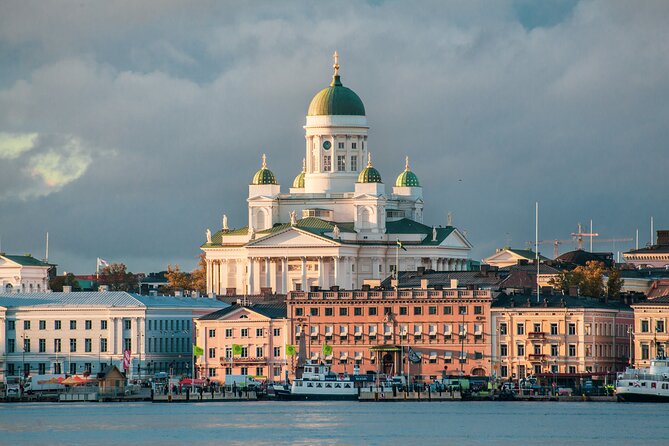
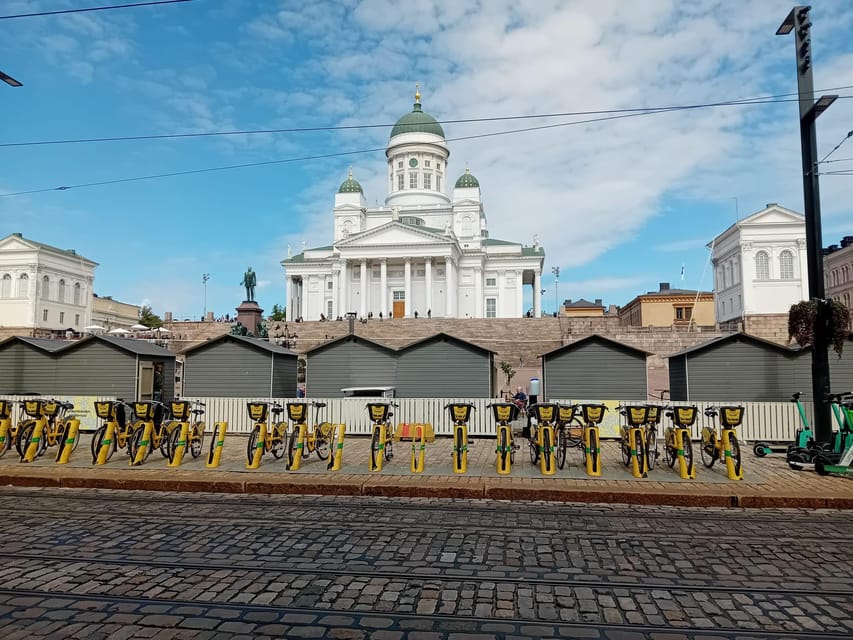
- Senate Square and Helsinki Cathedral: civic power on display
- The National Library and Oodi: why public buildings matter
- President’s Palace, Parliament House, and the theatres: politics and culture in the same walk
- Uspenski Cathedral, Allas Sea Pool, and the market area: faith, water, and everyday life
- Helsinki Central Station, City Museum, and Ateneum: the city tells stories in layers
- Finishing at Oodi: ending where city life feels public
- Price and value: why $56 can make sense for Helsinki center orientation
- Who should book this tour, and who might prefer something else
- Should you book the Helsinki Walking Tour with a Sociologist?
- FAQ
- How long is the Helsinki Walking Tour with a Sociologist?
- What is the price per person?
- Where do you meet for the tour?
- Where does the tour end?
- Is the tour guided in English?
- How many people are in the group?
- How much walking should I expect?
- What should I bring or wear?
- Is the tour wheelchair accessible?
Key things I’d put on your Helsinki wishlist
- A sociologist in the mix: you’ll connect landmarks to everyday life and social dynamics, not just dates.
- Max 6 people: questions stay easy, and the pace feels human.
- Classic Helsinki orientation: Senate Square, the Cathedral, National Library, and Oodi anchor the walk.
- Real-city stops: Market Square, Market Hall, and the sea pool area bring you out of postcard mode.
- Short guided moments, smart routing: each stop is timed so you cover a lot without feeling rushed.
Back in the capital, these Helsinki walks earned their stars
From Fazer Cafe to Kluuvikatu, starting with a clear plan

Meet in front of Fazer Café, then the walk begins around Kluuvikatu, right in the central flow of Helsinki. I like this setup because it means you’re not hunting for a weird side street or guessing where to start. You’re already in the part of town most people mean when they say Helsinki center.
The tour is designed as a rolling “orientation + meaning” session. Think short introductions at each stop, with the guide using the location as a prompt to talk about how the city functions historically and now. Expect a steady movement rhythm, not a slow meander with long pauses.
Because the group is limited to 6 participants, it’s the kind of tour where your guide can actually respond when you ask something. If you’re the type who wonders why the city is shaped the way it is, this format fits you well.
One practical note: the starting point is easy to find, but you still want to arrive a few minutes early so you don’t start flustered. When you’re about to walk 5 to 6 km, calm at the beginning pays off.
Senate Square and Helsinki Cathedral: civic power on display
Your first big landmark moment is Senate Square, guided for about 15 minutes. This is the place where Helsinki shows its official face, and your guide uses it as a springboard for bigger themes. You’ll hear how public spaces like this are not just scenic, they help shape identity and civic life.
Then you head to Helsinki Cathedral, with a short guided stop (about 5 minutes). Here’s where the sociologist angle is useful. Instead of treating the building like a standalone monument, your guide will frame it in relation to the city’s social story, including how religion, public ceremony, and architecture intersect.
I like that these early stops build context quickly. If you’re arriving in Helsinki for the first time, you get a foundation fast. If you already know the basics, you still get a new lens: why people gather in certain spots, and how these spaces influence behavior.
Drawback to keep in mind: the Cathedral stop is brief. If you want a slow wander inside or a long photo session, you’ll do it on your own time later. This tour is about orientation and meaning, not a museum visit.
The National Library and Oodi: why public buildings matter
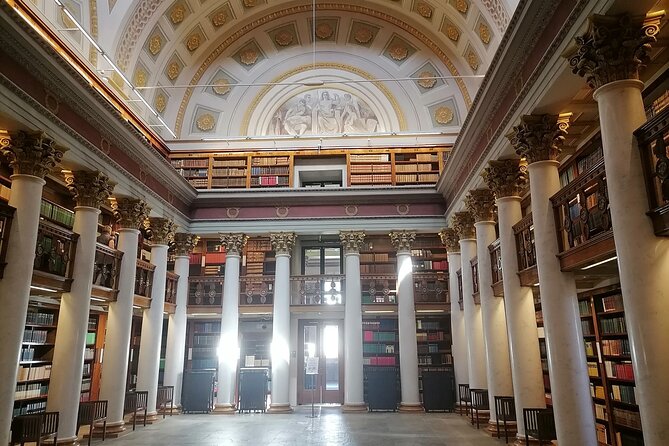
Next up is the National Library of Finland (about 15 minutes). Libraries are one of those places that look calm and quiet, but they’re social infrastructure. A library is where people come to study, learn, and participate in public life. Your guide ties that idea to the city’s historical direction and present-day priorities.
Then you reach Helsinki Central Library Oodi (about 15 minutes). Oodi is worth your attention because it’s not just a building with books. Your guide will use it to talk about contemporary city life: what the public asks for, how city services show values, and how people use shared spaces.
This pairing is smart. The National Library gives you the older institutional side of learning. Oodi shows you the modern version of civic culture, where a building can function like a meeting point and a community tool.
One reason I think this section is high value: it shifts the tour from monuments to systems. You stop seeing Helsinki as a collection of sights and start seeing it as a set of choices about public access, education, and community.
If you’re the type who loves architecture, you’ll get plenty to look at. If you’re not, you’ll still get the key idea: public buildings reveal what a city thinks its people need.
President’s Palace, Parliament House, and the theatres: politics and culture in the same walk
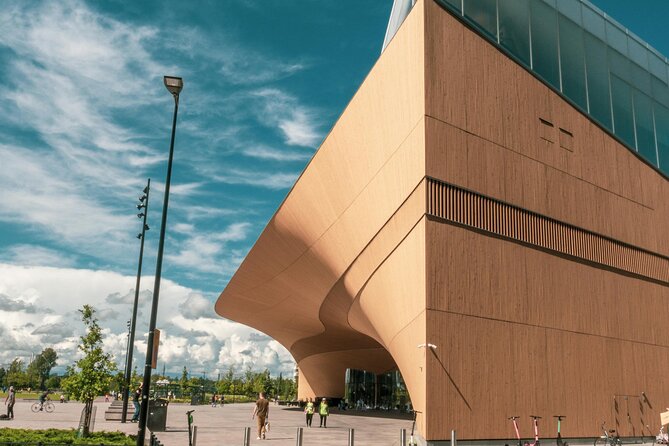
Mid-tour, you pass the President’s Palace (about 5 minutes) and later Parliament House (about 5 minutes). These stops are short, but they matter because they represent formal power. A sociology framing helps you notice something important: power isn’t only about decisions, it’s also about where decisions live and how the public relates to them.
Then the route turns more cultural, with stops like the Swedish Theater and the Finnish National Theatre. You also visit Kappeli (about 10 minutes) and Musiikkitalo. The theatres and performance spaces often show up in travel guides as “pretty buildings.” Here, the guide treats them as social meeting points and cultural institutions.
This is the part where you get a sense of Helsinki’s language and identity landscape, including how culture reflects different communities and traditions. Even without turning it into a lecture, the guide’s approach helps you connect the dots across the route.
One practical consideration: because several stops are around 5 to 10 minutes, you need to stay mentally ready. If you wander off for photos every time you see a good facade, you may feel behind when the group moves on. I’d recommend saving the longest photo breaks for spots where you already know you want more shots.
On foot is usually best. More Helsinki walks
- Epic Helsinki: English Speaking Walking Tour
★ 4.9 · 192 reviews - Helsinki walking tour with a city planner
★ 5.0 · 175 reviews - Helsinki Walking Tour – Small Group
★ 5.0 · 155 reviews - Helsinki: Small-Group Walking Tour with City Planner Guide
★ 5.0 · 91 reviews - Helsinki: Private Walking Tour with a Local Guide
★ 4.7 · 87 reviews
Uspenski Cathedral, Allas Sea Pool, and the market area: faith, water, and everyday life

Your tour includes Uspenski Cathedral (about 10 minutes). This stop is often memorable for travelers because the exterior is distinctive, but your guide gives it context beyond aesthetics. You’ll learn how places like this fit into Helsinki’s religious and cultural layers, and how those layers show up in the streets.
Then you’re guided past Allas Sea Pool (about 5 minutes). Even though it’s not a huge time commitment on the schedule, it’s a great reminder of what Helsinki does well: public life near the water. You can think of it as a modern social habit, where the city uses the coast as a shared space.
After that, the walk hits Market Square, Helsinki (about 10 minutes) and then Market Hall, Helsinki (about 15 minutes). This is where the tour shifts from civic and cultural structures to daily rhythms. Markets are sociology in action: they show what people buy, how communities gather, and how the city feeds itself socially as well as literally.
If you want to understand Helsinki as a living place, this market section is your best clue. You’ll see how the center works on ordinary days. Even if you’re not shopping, you’re getting a feel for the social engine of the city.
Quick drawback to be aware of: since your guide is managing time across many stops, this is not a slow, hang-out market crawl. If you want to browse long or eat something, plan to do it after the tour ends.
Helsinki Central Station, City Museum, and Ateneum: the city tells stories in layers

Later you pass Helsinki Central Station (about 10 minutes). Stations are powerful for a simple reason: they’re where the city connects. Your guide uses the location to talk about movement, identity, and the social role of transit hubs. Even in a short visit window, you get a sense of Helsinki as a place that welcomes flow.
The tour then includes Helsinki City Museum (guided). You’ll use this stop to understand how the city frames its own story, and how the present interprets the past. It’s a chance to step back for a moment and see how Helsinki explains itself.
Then you visit Fazer Café Sanomatalo (about 5 minutes) and Art Museum Ateneum (about 5 minutes). These are quick stops, but they’re not random. They help build the idea that culture and institutions run alongside the everyday street grid. If you like art, you’ll appreciate the Ateneum stop as a clean signal of what kind of cultural scene Helsinki has. If you’re more practical, it still works because it gives you names and anchors for later independent exploring.
This part of the route is also where your brain starts organizing. After you’ve seen civic power, faith, culture, markets, and infrastructure, museum and art stops become easier to place in your mental map.
If there’s a downside, it’s attention. By this point you’re deeper into the 3-hour timeline, so you’ll want to pace yourself with short rests when the group pauses. Think water breaks and quick breathing, not slow stops that break the schedule.
Finishing at Oodi: ending where city life feels public
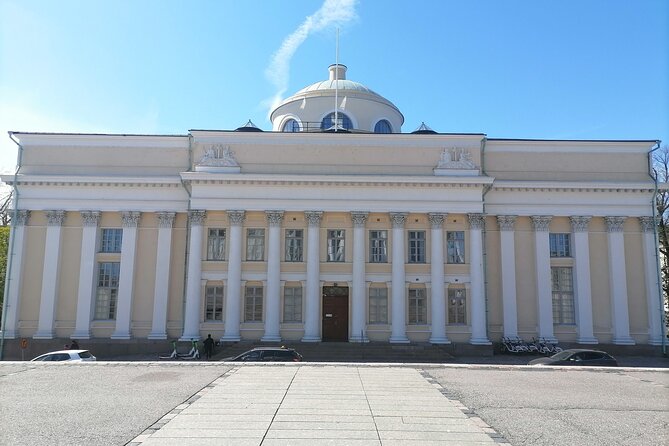
The tour finishes back at Oodi – Helsinki Central Library. That ending is clever. You start the experience with a recognizable café meeting point, then you work outward into the center’s civic, cultural, and everyday core, and you close at a place that represents public access to ideas and community space.
This ending also gives you a practical benefit. If you want to continue exploring on your own, you’re ending in the city core with a strong landmark. You can grab food nearby, shop, or simply wander without guessing where you are.
If you’re thinking ahead, this is also a good time to note where you want to return. The tour gives you context, but it doesn’t replace deeper independent time. If you saw something you loved, your best next step is to plan a follow-up walk or a revisit.
Price and value: why $56 can make sense for Helsinki center orientation
At $56 per person for a 3-hour small-group walking tour, the price is not cheap in the way a generic city bus might be. But it can be good value because you’re paying for two things: a tight route through central Helsinki and a specialized way of interpreting what you see.
A PhD student in Sociology plus a local guide means you’re not just getting “what this building is.” You’re getting a framework for how the city’s public spaces connect to social life, past decisions, and present behavior. That kind of guide value is harder to replicate on your own.
Add the logistics reality: this walk covers a cluster of major stops across the center. For many first-timers, you would spend time hopping between attractions and still come away with a pile of photos and limited context. Here, the route helps you build meaning while your feet keep you moving.
What’s not included is also part of the value equation. There’s no food and no transportation. That’s normal for walking tours, but it means you should plan a meal or snack outside the group time.
Who should book this tour, and who might prefer something else

This experience fits you best if you like city walking tours with context. It’s especially good for people who want to understand why Helsinki looks the way it does and how public life works, not just what’s inside each postcard-famous spot.
It’s also a strong match if you enjoy questions and conversation. With a group limited to 6 participants, you’re not stuck as one voice in a crowd.
You might want to pick a different option if you dislike walking distances, because you should be ready for 5 to 6 kilometers in about 3 hours. You should also skip this if wheelchair access matters, since the tour is not suitable for wheelchair users.
If you already know Helsinki well and want deep dives into one museum, this might feel a bit “many stops, short time.” But if your goal is orientation and social context across the center, it’s exactly the kind of format that pays off.
Should you book the Helsinki Walking Tour with a Sociologist?
Yes, if you want a Helsinki tour that helps you see more than the surface. I’d book it if you enjoy walking, you’re comfortable with short guided stops, and you like the idea of hearing how public spaces connect to social life.
Skip it if walking 5 to 6 km is a stretch, or if you only want long, slow time inside museums and attractions. And if you’re extremely photo-focused, plan extra independent time afterward at the places that caught your eye, especially around Oodi and the market area.
In short: for an efficient, meaning-first overview of central Helsinki in a small group, this is a smart bet.
FAQ
How long is the Helsinki Walking Tour with a Sociologist?
It lasts 3 hours.
What is the price per person?
The price is $56 per person.
Where do you meet for the tour?
Meet in front of Fazer Café.
Where does the tour end?
The tour finishes at Oodi, Helsinki Central Library.
Is the tour guided in English?
Yes, the live tour guide speaks English.
How many people are in the group?
The group is small, limited to 6 participants.
How much walking should I expect?
Be ready to walk about 5 to 6 kilometers.
What should I bring or wear?
Wear comfortable shoes, and dress for the weather since the tour runs year-round.
Is the tour wheelchair accessible?
No, it is not suitable for wheelchair users.
More Tours in Helsinki
Still in Helsinki? Keep Walking
More Tour Reviews in Helsinki
Latest from the Helsinki notebook
- Winter kayaking in Eastern Helsinki archipelago★ 5.0 · 3 reviews
- Private Porvoo Tour & Visit Runeberg’s National Poet House★ 5.0 · 3 reviews
- The Instagrammable Places of Helsinki with a Local★ 5.0 · 3 reviews
- Redrib sunset lounge experience★ 5.0 · 3 reviews
- Turku tour from Helsinki★ 3.5 · 3 reviews
- Helsinki City 3-Hour Kayak Trip★ 5.0 · 3 reviews
The rest of Helsinki City Tours.
 ★ 4.5Helsinki: Sightseeing Canal Cruise with Audio CommentaryFrom $331,299 reviews
 ★ 5.0A Finntastic Walking Tour in HelsinkiFrom $24700 reviews
 ★ 4.8From Helsinki: Nuuksio National Park Half-Day TripFrom $66688 reviews
 ★ 4.2Helsinki: Hop-On Hop-Off City Bus TourFrom $42585 reviews
 ★ 4.3Helsinki: Bus Tour with Audio GuideFrom $41544 reviews
 ★ 4.3Helsinki: Evening Archipelago CruiseFrom $30468 reviews
 ★ 4.4Helsinki Archipelago: Sightseeing Boat TourFrom $33436 reviews
 ★ 4.3Helsinki: Temppeliaukio Church Entrance TicketFrom $9421 reviews
Where this one also turns up