
REVIEW · FISHING
Arctic Fishing & Open Fire Cooking
In This Review
- Ice holes, honest food, and a warm fire
- Key highlights you’ll care about
- Ice Fishing Traditions at Rahajärvi, Ivalo
- Meeting Point, Timing, and How You Get to the Lake
- Drilling Holes, Ice Fishing, and Net Fishing Under the Ice
- Open-Fire Cooking: How Your Catch Turns Into a Meal
- What You Actually Eat, and Why It Feels Different Here
- Price and Logistics: Does $167 Per Person Add Up?
- Clothing, Safety Gear, and Weather Reality Checks
- Who This Trip Fits Best (And Who Might Want to Skip)
- Should You Book Arctic Fishing and Open Fire Cooking in Lapland?
- FAQ
- What is the duration of the Arctic Fishing and Open Fire Cooking trip?
- Where do I meet the guides?
- Is there pick-up included from my hotel?
- What fishing techniques will I learn?
- What is included in the price?
- What should I bring with me?
- Is winter clothing provided?
- Do I need to speak Finnish to join?
- Can I bring a dietary restriction or allergy?
Ice holes, honest food, and a warm fire
This is the kind of Lapland day that starts with kairaaminen (drilling into the ice) and ends with fish you actually caught. You’ll get guided practice in classic winter methods like pilkkiminen and juomustus, plus the best part, cooking your haul over an open fire. It’s calm, hands-on, and very real winter Finland.
I especially like how the guides turn unfamiliar technique into something you can do, and how the day is built around getting warm with your own catch. One possible drawback is that you still need proper winter clothing, because winter layers are not included, and the lake air can change fast.
Not sold yet? These Inari Municipality outings kept scoring well in our notes.
Key highlights you’ll care about
- Traditional ice fishing practice with clear instruction, not just watching from the shore
- Three classic methods: drilling holes, ice fishing, and net fishing under the ice
- Open-fire cooking where you eat what you caught, fresh and simple
- A warm campfire setup in cold weather, with food prepared for you at the site
- Family-friendly guidance where kids and grandparents can all take part comfortably
Ice Fishing Traditions at Rahajärvi, Ivalo
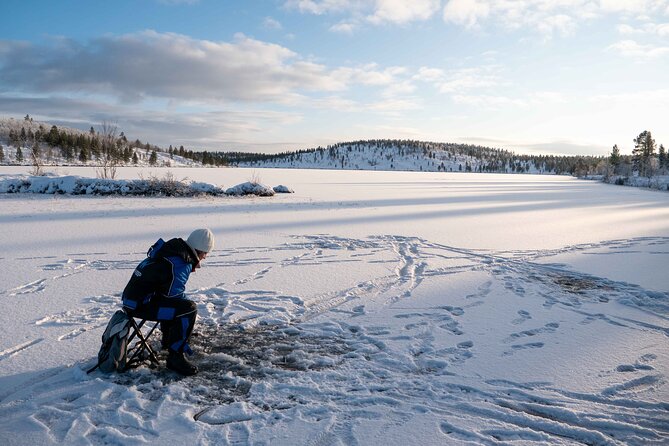
The setting is Rahajärvi near Ivalo, in Finnish Lapland, where the winter water is cold and clear. That matters because fish quality in these conditions is a big part of why the meal feels special, not just because it’s cooked outside.
You’re not here for a quick photo stop. You’re here to learn the basics of how people fished through winter in the North, including drilling holes in the ice and working fish from below. It’s old-school, practical knowledge, taught in a way that feels doable even if you’ve never ice fished before.
If you like nature days where the pace is slow and the activity is grounded in real skills, this hits the mark. The quiet around the lake is also a nice change from constant car time and museum stops.
Meeting Point, Timing, and How You Get to the Lake
You meet at Eräsoppi / Xwander shop at Ivalontie 12. Plan to arrive by 9:45 because you’ll need a bit of prep time before you head out, with the trip starting at 10:00.
The total duration is about 5 hours, and you’re back around 15:15. That timing is useful if you want a full morning or mid-day activity without eating your whole day.
Transport is straightforward, but it depends where you’re staying. There’s a complimentary pick-up service for Ivalo, while you’ll need to contact the operator ahead for transfers in areas like Inari, Nellim, Saariselkä, and Kiilopää.
Why this matters: if your hotel is outside Ivalo, you’ll want to confirm transfer timing early, so you’re not stuck figuring out logistics at the last minute. Also, build in buffer time for winter conditions, because roads and weather can shift quickly.
Drilling Holes, Ice Fishing, and Net Fishing Under the Ice
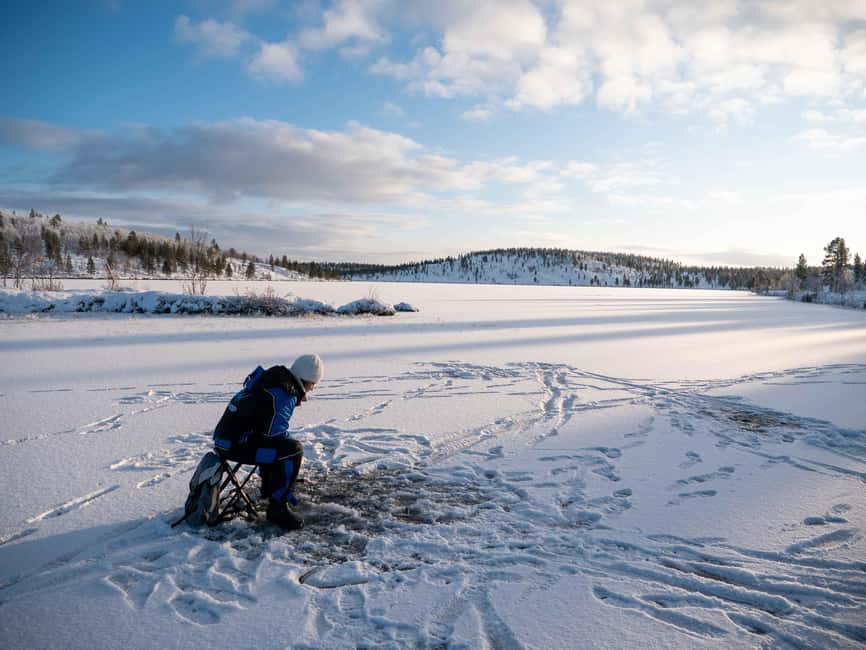
This is the heart of the day, and it comes in clear steps.
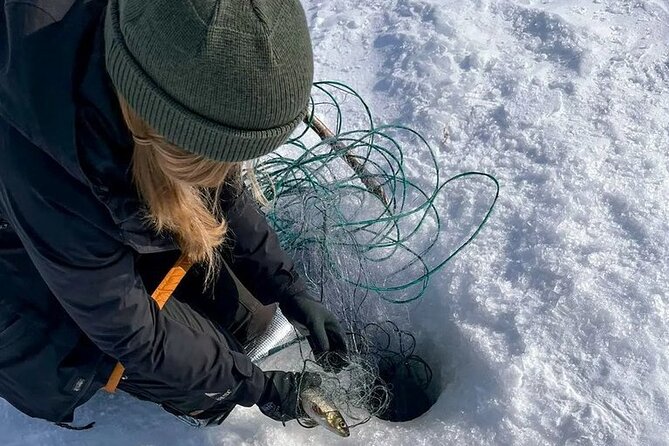
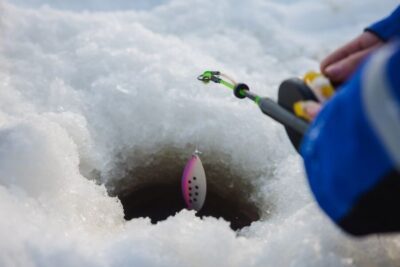
First comes kairaaminen, drilling holes through the ice. Even if the guide does the hardest parts, you’ll still get hands-on time and learn what you’re looking for and why. It’s one of those tasks that changes your perspective instantly, because you start understanding how the whole system works.
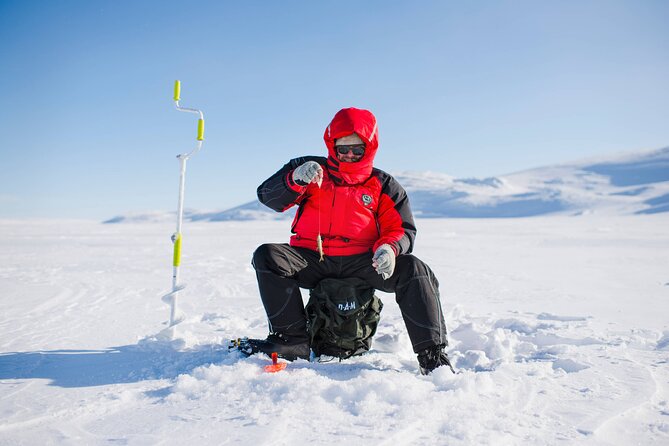
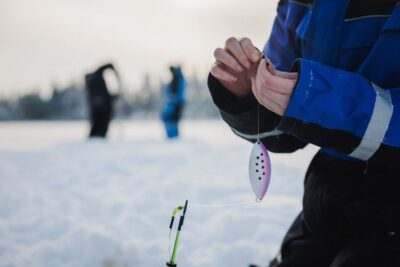
Next is pilkkiminen, ice fishing. You’ll fish from those holes using the gear provided, and you’ll learn the basics the guide wants you to follow. The method is simple, but there’s real technique in timing, handling, and paying attention to what the line and water are doing.
Then comes juomustus, net fishing under the ice. This part is especially memorable because it feels different from line fishing. In at least one guided setup, you catch fish with a fishing line, then the group checks nets as part of the process. That mix makes the day feel varied instead of repetitive.
One more thing I like about the approach: guides don’t treat this like a test. They explain what’s happening and adjust based on who’s in the group, including families. In one instance, a guide named Julien cooked fish after the group worked through both line fishing and net checks, and he stayed helpful throughout.
Open-Fire Cooking: How Your Catch Turns Into a Meal
Once fishing wraps up, you switch gears from cold hands to warm food. The experience is designed around cooking your catch on an open fire at the camp.
You’ll get cooking equipment and table wear, plus the safety equipment you need for a winter activity like this. You also get help trying out different styles of cooking fish on the fire, which matters because it teaches you what changes with heat and method, not just what to eat.
Practically, this is the moment the day transforms. You’re still outside, still in winter, but now you’re in the warm zone, with food progressing step-by-step. That’s a huge comfort factor, especially if you came for something active but not exhausting.
In the food setup, you’re not left to figure out the fire alone. One guided meal included salmon soup and even marshmallows by the fire. Another setup included a cream-based fish stew with bread. Those details are exactly why this feels like more than a fishing lesson.
And yes, you’ll eat your catch. That gives the meal a grounded satisfaction that you just don’t get from ordering food after the fact.
What You Actually Eat, and Why It Feels Different Here
The promise is simple: the fish is as fresh as it gets because it comes straight from what you caught. In the North, the cold water helps preserve quality, and the guides understand how to make the most of it.
Expect fish-based dishes prepared at the site. From the examples you might encounter, there can be things like salmon soup and a cream stew with bread. There are also warming add-ons, like marshmallows, which make the campfire part feel festive without turning it into a circus.
This is also where group dynamics shine. Around the fire, people relax, warm up, and compare what worked, whether that was finding a productive hole, landing a fish, or helping with the net portion. It becomes a shared day, not a solo achievement.
If you’re the type who likes food, you’ll appreciate that this isn’t a big gourmet menu. It’s straightforward winter cooking, tuned to the ingredients you just brought out of the lake.
Price and Logistics: Does $167 Per Person Add Up?
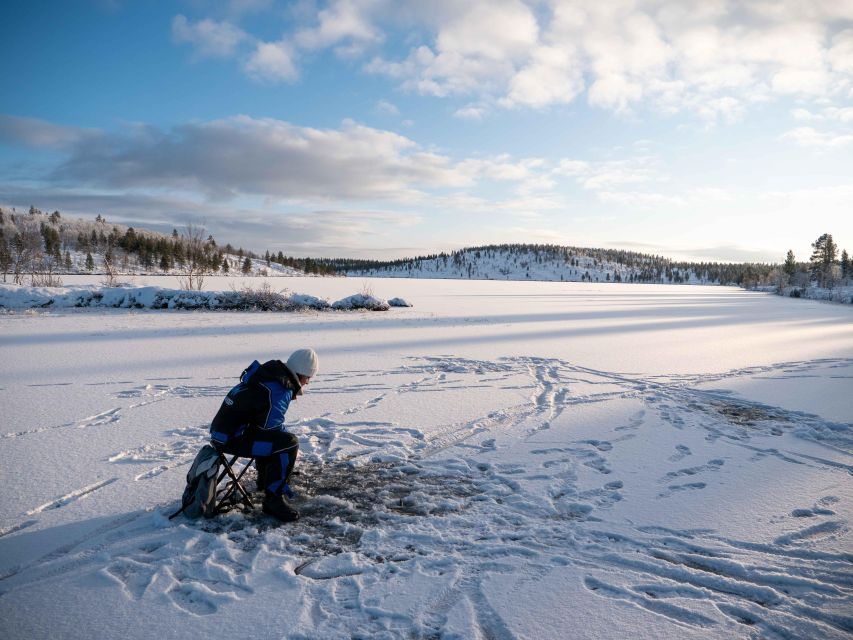
At $167 per person for about 5 hours, you’re paying for several things at once: guided instruction, access to winter fishing on the lake, open-fire cooking with equipment and table wear, and safety gear.
What makes it good value is that you’re not just being transported and pointed at a viewpoint. You’re learning multiple techniques, then eating a meal tied to the day’s catch. In practical terms, that turns the cost into a full activity with food, rather than a simple half-day tour.
Still, there are extra costs or considerations you should budget for. Winter clothing is not included, so you’ll likely need to rent or bring your own layers. Also, transport to the meeting point is not included unless you’re in Ivalo, where pick-up is complimentary. If you’re staying farther out, you’ll need to arrange transfer, and it could change your total trip cost.
So I’d frame the pricing like this: if you already have proper winter gear and your transfer is sorted, it’s a fair, concentrated experience. If you still need major winter clothing and long-distance transfers, you should factor that in before booking.
The other value sign I watch: the experience earns high marks from past participants, including families who valued the warm camp setup and the guides’ ability to explain steps clearly.
Clothing, Safety Gear, and Weather Reality Checks
Winter in Lapland can change quickly. The trip can go forward in real cold, wind, and shifting conditions, so your clothing matters more than usual.
Bring warm clothing and plan for windproof layers. You’ll also want to pack a camera, snacks, and water. The guide provides safety equipment and the cooking setup, but you should handle your own warmth and basic comfort.
Here’s the practical rule: if you think you’re dressed well enough, add one more warm layer. Ice fishing around a lake often feels colder than you expect, because you’re standing still for parts of the activity.
Also remember dietary needs when you book, especially if you have allergies. The experience asks you to mention dietary requirements and allergies ahead of time, which is the responsible move when fish is part of the menu.
If your priority is staying comfortable, this trip rewards you for preparation.
Who This Trip Fits Best (And Who Might Want to Skip)
This is a strong match for you if you want an authentic winter day with real skills. You’ll likely enjoy it if you like learning how something is done, not only seeing it. It also works well for multi-generational groups because the guide instruction can be adapted, and the campfire time helps everyone stay comfortable.
It’s also a good choice for families. One described experience included young kids and grandparents, and everyone stayed engaged from drilling and fishing to cooking around the fire.
You might hesitate if you dislike cold weather activities or if you do not want to invest in proper winter clothing. Because winter gear is not included, you’ll feel the cold more if you show up underprepared.
Should You Book Arctic Fishing and Open Fire Cooking in Lapland?
If your idea of a great Lapland day includes hands-on fishing, open-fire food, and calm nature time, I’d say book it. The combination of traditional ice fishing methods and cooking your catch on an open fire is the real draw, and the guides make it work even for first-timers.
I’d also book if you’re looking for a half-day format that’s long enough to feel meaningful but short enough to keep your energy for the rest of your trip. With a roughly 5-hour duration and a return around 15:15, you can still plan evening activities afterward.
One last decision tip: make sure you’re ready for the winter clothing part. If you can handle that, the experience feels like a complete package, with safety gear, equipment, cooking supplies, and a meal tied directly to your fishing effort.
Given the strong overall rating (4.7 from 12 past bookings), it’s the kind of activity that consistently lands well when you show up prepared.
FAQ
What is the duration of the Arctic Fishing and Open Fire Cooking trip?
The trip lasts around 5 hours, starting at 10:00 and returning to the shop around 15:15.
Where do I meet the guides?
Meet at Eräsoppi / Xwander shop, address Ivalontie 12. Please arrive by 9:45.
Is there pick-up included from my hotel?
There is a complimentary pick-up service for Ivalo. For Inari, Nellim, Saariselkä, and Kiilopää, you need to contact the operator ahead to book a transfer.
What fishing techniques will I learn?
You’ll learn traditional methods including drilling holes in the ice (kairaaminen), ice fishing (pilkkiminen), and net fishing under the ice (juomustus).
What is included in the price?
Included items are open fire food, cooking equipment and table wear, and safety equipment.
What should I bring with me?
Bring warm, windproof clothing, a camera, snacks, and water.
Is winter clothing provided?
No, winter clothing is not included.
Do I need to speak Finnish to join?
No. The live guide speaks Finnish, English, and French.
Can I bring a dietary restriction or allergy?
Yes. You should mention dietary requirements and allergies when booking.
More Tour Reviews in Inari Municipality
Latest from the Inari Municipality notebook
- Arctic Fishing & Open Fire Cooking★ 4.7 · 12 reviews
The rest of Fishing.
 ★ 4.8Rovaniemi: Snowmobile and Ice Fishing Adventure with LunchFrom $222879 reviews
 ★ 4.5Rovaniemi: Ice Fishing ExperienceFrom $104379 reviews
 ★ 4.6Rovaniemi: Ice Fishing & Snowmobile Safari Combo DayFrom $190268 reviews
 ★ 4.9Levi: Snowmobile Safari with Ice Fishing and Outdoor LunchFrom $221195 reviews
 ★ 4.7From Rovaniemi: Snowshoeing and Ice Fishing TourFrom $135190 reviews
 ★ 4.5Rovaniemi: Arctic Circle Ice Fishing ExperienceFrom $104101 reviews
 ★ 4.5Snowmobile and Ice Fishing ExperienceFrom $24087 reviews
 ★ 4.4ICE FISHING experienceFrom $10081 reviews
Where this one also turns up