
REVIEW · ROVANIEMI TOURS
Rovaniemi: Ice Floating Experience
Floating on ice in Lapland sounds impossible.
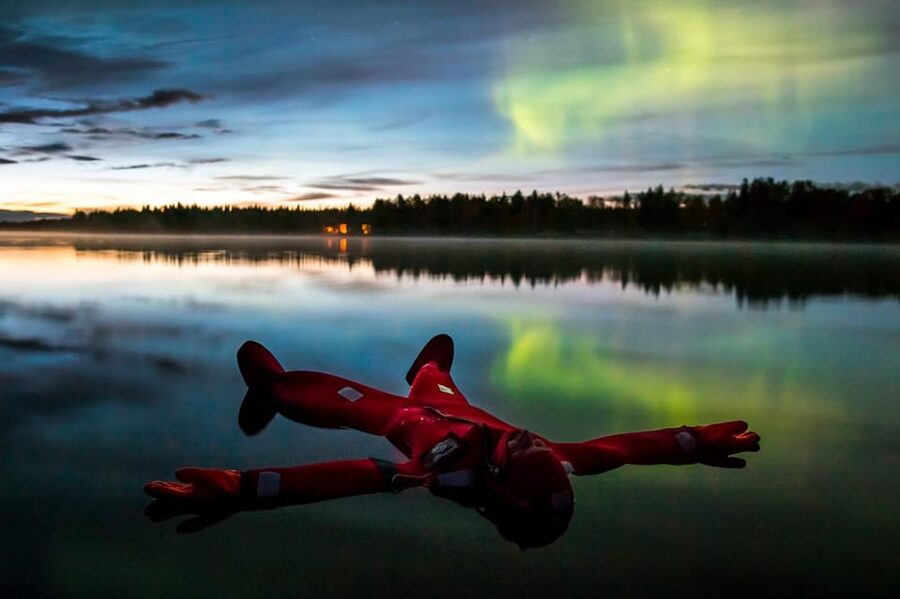
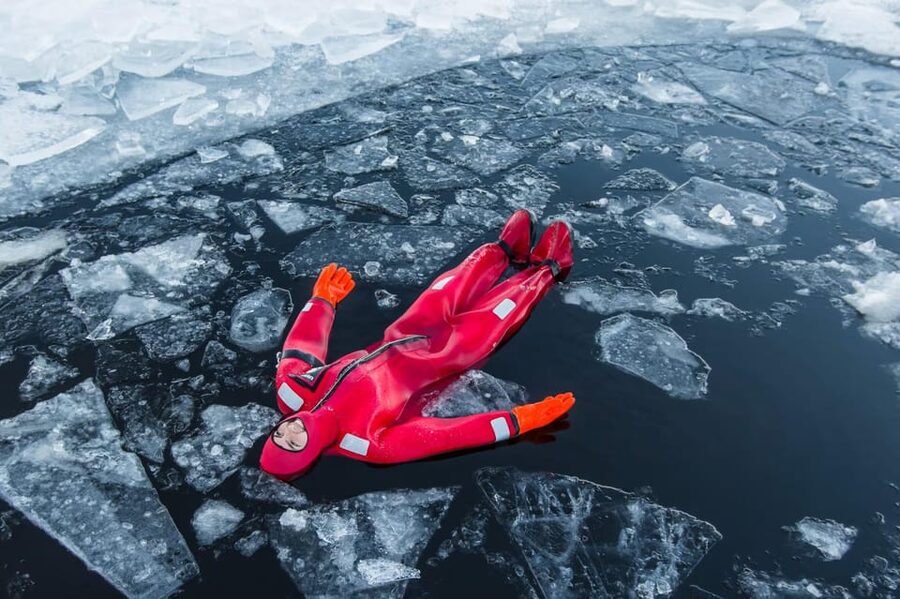
But this Rovaniemi ice floating experience turns it into a calm, simple winter ritual: a guide-led session on private land, on a frozen lake, with you wearing thermal survival gear designed to keep you both warm and buoyant. The real magic is the silence. Up above, the sky feels huge, and down below you get a front row view of winter from a very different angle.
I also like how practical the whole setup is. You get a safety briefing, a live guide in English, Spanish, or French, and a small group capped at 9 people, so it feels controlled instead of chaotic. The one drawback to plan around is cold waiting and changing time. One past participant noted the changing area was very cold and not heated, which matters when temperatures can drop to around -24°C.
In This Review
- Key points worth knowing before you go
- Rovaniemi Ice Floating, quiet Lapland on a frozen lake
- The 3-hour flow, from pick up to hot drink and cookies
- Thermal survival gear, what it does for you in real life
- The Arctic stillness you feel while you float
- Guide and group size, why the support matters in cold weather
- What to bring, and how to handle the cold between steps
- Weather can move the schedule, so build flexibility
- Price and value, is $141 worth it?
- Who should book this ice floating in Rovaniemi, and who should skip
- My booking decision checklist, should you go?
- FAQ
- Is the Rovaniemi ice floating experience in Lapland on a frozen lake?
- How long is the ice floating experience?
- How much does it cost?
- Is pickup and drop off included?
- What is included in the price?
- Are meals included?
- What languages is the live tour guide available in?
- Do I need to know how to swim?
- Are alcohol or drugs allowed?
- What is the cancellation policy?
Key points worth knowing before you go
- Small group, max 9 people makes the briefing and support feel more personal
- Private land on a frozen lake gives you that quiet Lapland feeling fast
- Thermal survival gear keeps you warm and helps you stay buoyant while you float
- Hot drink and fresh cookies after give you a real end-of-activity reset
- Weather-dependent schedule means the start time or even the session can change
- You must be comfortable in the water and know how to swim
Rovaniemi runs deep. A few more we rated
Rovaniemi Ice Floating, quiet Lapland on a frozen lake
Rovaniemi is famous for Arctic winter, but this activity does something clever. Instead of rushing you through photos, it slows your body down. You are literally suspended on a frozen lake surface, letting the cold air and the wide sky do the heavy lifting for your mood.
The setting is Lapland winter wilderness on private land. That matters because it helps keep the experience serene, and it reduces the feeling of being in a crowded tourist bottleneck. When the water goes still and everything around you is snow-covered, you can actually notice details. The sound changes. The air feels sharper. Your brain stops trying to multitask.
Another big reason this works is the gear. You do not just wear normal winter clothes and hope for the best. You put on thermal survival gear, the kind meant to protect you from the cold while you are in contact with icy water. It is the difference between shivering through a gimmick and feeling steady enough to enjoy the moment.
One practical thing to remember: even if you dress right, cold “in-between time” still exists. If the temperature is brutal, anything not directly heated, including changing areas, can feel extra chilly.
The 3-hour flow, from pick up to hot drink and cookies
This is a 3-hour experience, and that time is paced for a simple reason. You need a little time before and after the float for gear, instructions, and warming up.
Here is the typical order of events, based on how this kind of guided ice floating runs and what is explicitly included:
First, you meet your guide and start with pickup and drop off. The experience says transport is included, but it also notes that transportation to and from the activity location is not included. That combination can happen when some pickup coverage depends on where you are staying. So I recommend confirming the exact pickup point before you rely on it.
Next comes the cold-weather “prep phase.” You will don the thermal survival gear and get a safety briefing. The activity requires that you are comfortable in the water and know how to swim, so the instructions are not optional background information. They are part of making the floating feel safe and calm.
Then you get out onto the frozen lake area for the actual floating. This is the core of the experience, and it is less about thrill and more about stillness. You are buoyant, you can relax your posture, and you watch the Arctic scenery from a perspective most people never get.
Finally, you warm up with a hot drink and fresh cookies after the activity. That post-float stop is not a throwaway perk. After time in icy conditions, warm calories and a hot beverage help you recover fast and feel human again.
Thermal survival gear, what it does for you in real life
The gear is the main reason this activity is comfortable enough to recommend. Thermal survival gear is designed for one job: protecting you from cold water exposure while you float.
Here is how I think about it as a value check for you as a traveler. If an ice activity only offered normal winter layers, it would be a stressful experience. Your body would fight the cold, your mind would stay on survival mode, and you would end up clenching your way through a short segment.
Instead, the thermal survival gear approach shifts the focus. You can actually pay attention to what is around you, like the vast sky and the stillness above the ice. You might not control the weather, but you can control whether your body feels miserable.
One more gear-related consideration: you still need to bring warm clothing. That does not mean you can skip packing. It means you should plan for layers underneath and warm insulation for after you remove the gear. Also keep in mind that changing areas can be cold, so think of your clothing as part of your comfort strategy, not just protection.
The Arctic stillness you feel while you float
Floating on a frozen lake changes your relationship with winter. On snow, you are upright and moving. On ice, you slow down. You become a floating observer. That shifts everything.
You get to experience the peace of an Arctic landscape in a way that feels almost private, even though you are with a small group. The guide keeps you organized, but the moment itself is quiet. You are surrounded by snow-covered wilderness and that wide Lappish sky, and the calm is the feature, not the side effect.
A subtle benefit is how your attention changes. You stop scanning for activity and start noticing distance, light, and the way cold air shapes sound. That is when the experience becomes memorable beyond the photo.
Timing can add variety. The experience description also mentions possibilities like daytime sun or the Northern Lights. Nobody should expect lights every night, but it is a nice extra window of opportunity in Lapland during winter. If conditions align, the experience can feel even more surreal from that floating perspective.
Cold water, dry suit. Other float and dip experiences
- Rovaniemi: Ice Floating in Forest Lake with Aurora Borealis
★ 4.4 · 614 reviews - Rovaniemi: Traditional Sauna and Ice Swimming Experience
★ 4.9 · 431 reviews - Best Of Lapland: Sauna, Ice swimming, Dinner & Northern Lights
★ 5.0 · 158 reviews - Aurora Arctic Ice Floating in Rovaniemi, Small-group
★ 5.0 · 109 reviews - Daytime Arctic Ice-Floating in Rovaniemi, Small-Group
★ 5.0 · 75 reviews
Guide and group size, why the support matters in cold weather
This is a small group, limited to 9 participants, with a live tour guide. That structure is a comfort factor for you. In winter activities, the riskiest part is not the lake. It is confusion and crowd energy when everyone is cold and trying to get ready.
A small group helps in three ways:
- The safety briefing can be heard and followed.
- You can get individual reminders about what to do and how to float comfortably.
- You are less likely to feel rushed during changing and gear fitting.
The guide language options are also a practical detail. You can go in English, Spanish, or French, which reduces the risk of missing key instructions. Clear instructions are important because the activity requires you to be comfortable in the water and know how to swim.
One more thing I appreciate is that the activity is described as professionally guided. You want someone who can keep the group calm and move at a steady pace, especially when temperatures are far below comfortable.
What to bring, and how to handle the cold between steps
You only get one clear instruction on the packing list: bring warm clothing. Fair. Winter in Lapland does not forgive sloppy preparation.
I would treat your packing like this:
- Dress in warm layers under your clothing, because you might stand around briefly before you’re fully geared up.
- Focus on insulation more than fashion. Your job is to stay warm, then float.
- Plan for changing time. If the changing room is not heated, being overdressed matters, and having warm layers ready to put back on matters too.
The good news is that the included thermal gear should do most of the heavy protection work during the float itself. The less fun part is everything around it, like waiting, transitioning, and warming back up.
Also note the rules: alcohol and drugs are not allowed. Keep it simple, follow the guide’s instructions, and treat it like a safety-first outdoor activity.
Weather can move the schedule, so build flexibility
This ice floating experience is weather-dependent. The tour may be rescheduled or canceled if conditions are unsuitable.
That is not just fine print. In Lapland winter, wind, ice conditions, visibility, and temperature can all affect whether the day’s plan is safe and enjoyable. So you should book with some flexibility in your schedule.
If you are traveling with tight timing, you might want a backup day for winter activities. That way, if this session changes, you are not forced into rushing your whole itinerary.
Price and value, is $141 worth it?
At about $141 per person for a 3-hour guided experience, this is not a budget throw-in. But it can be good value if you match it with what is included.
What you get for that price:
- Pickup and drop off (with the note to verify your exact pickup coverage)
- Thermal survival gear
- Live guide
- Hot drink and fresh cookies after
- Small group experience with a max of 9 people
What you do not get:
- Meals
- Your own transport to the activity location if pickup is not available for your area
So here is the value logic. You are paying for gear and guidance for a water-based Arctic experience, plus time built in for recovery with hot drinks and cookies. You are also buying a rare sensation, floating on a frozen lake in Lapland, which is hard to replicate on your own.
If you were planning to do a different winter activity that also requires specialized gear and a guide, you would likely pay a similar range. If you skip it and try to do it independently, you lose the safety briefing and the whole designed buoyancy setup, and you also lose the structured warm-up part.
Who should book this ice floating in Rovaniemi, and who should skip
This experience can be a great fit if you want calm, winter-focused time with real Arctic silence. It is also a good choice if you like guided activities where the logistics are handled and you can focus on the moment.
You should consider booking if you:
- Want a unique way to experience Lapland winter without racing around
- Are comfortable being in cold conditions and following safety instructions
- Know how to swim and feel confident in the water
- Prefer small group outings
You should not book if you:
- Are pregnant
- Have back problems
- Have heart problems
Those restrictions matter. Cold water and physical stress can be risky, so the cutoff is there for a reason. If any of those apply, look for a different winter activity that suits your situation better.
My booking decision checklist, should you go?
If your goal is to experience Arctic winter from a calm, unusual angle, this ice floating session is one of the smarter ways to do it in Rovaniemi. The included thermal survival gear plus a small group and professional guidance makes the experience feel planned, not improvisational. The hot drink and fresh cookies after are also a genuinely helpful finish, not just a courtesy.
I would only hesitate if you dislike cold waiting, because changing and setup time can be quite chilly. If you are sensitive to freezing temperatures in transitional spaces, plan extra warm layers and expect that you will not be in a comfortable heated room the whole time.
So, should you book? If you are a confident swimmer, comfortable with cold, and you want quiet Lapland time, yes. If you want a warm, indoor-first day, this is probably the wrong pick.
FAQ
Is the Rovaniemi ice floating experience in Lapland on a frozen lake?
Yes. It takes place on a frozen lake in Lapland, Finland, on private land.
How long is the ice floating experience?
The duration is 3 hours.
How much does it cost?
The price is $141 per person.
Is pickup and drop off included?
Pickup and drop off are listed as included, but you should confirm the exact pickup point for your lodging area since transportation to and from the activity location is also listed as not included.
What is included in the price?
Included are pickup and drop off, thermal survival gear, and a hot drink with fresh cookies after the activity.
Are meals included?
No, meals are not included.
What languages is the live tour guide available in?
The guide is available in English, Spanish, and French.
Do I need to know how to swim?
Yes. Participants should be comfortable in water and should know how to swim.
Are alcohol or drugs allowed?
No. Alcohol and drugs are not allowed.
What is the cancellation policy?
Free cancellation is available up to 24 hours in advance for a full refund. The experience is also weather-dependent and may be rescheduled or canceled if conditions are unsuitable.
Floating and Swimming in Ice
Rovaniemi, Keep Going
More Tour Reviews in Rovaniemi
Latest from the Rovaniemi notebook
- Winter highlights: Snowmobile, Arctic Animals And Santa`s Village★ 4.5 · 3 reviews
- Snowshoeing tour with Wild Lunch★ 5.0 · 3 reviews
- Full-Day Snowshoeing Adventure in Amethyst Mine Pyhä Luosto★ 5.0 · 3 reviews
- Snowmobile Safari in the Nature – Morning start★ 4.5 · 3 reviews
- Small-Group Moose Wild Safari from Rovaniemi★ 4.5 · 3 reviews
- Husky Sledding Self-driving in Rovaniemi★ 4.5 · 3 reviews
The rest of Rovaniemi Tours.
 ★ 4.6Rovaniemi: Northern Lights Tour with Guaranteed SightingsFrom $1643,836 reviews
 ★ 5.0Northern Lights Rovaniemi: Guaranteed Viewing & Unlimited MileageFrom $2282,321 reviews
 ★ 4.0Rovaniemi: Lapland Northern Lights Tour with BBQFrom $811,569 reviews
 ★ 4.5Rovaniemi: Reindeer, Huskies & Santa Claus VillageFrom $2131,543 reviews
 ★ 4.3Rovaniemi: Small-Group Northern Lights Wilderness TourFrom $1361,515 reviews
 ★ 4.8From Rovaniemi: Korouoma Canyon and Frozen Waterfalls TourFrom $1361,489 reviews
 ★ 4.6Rovaniemi: Apukka Husky AdventureFrom $2371,328 reviews
 ★ 4.6Rovaniemi: 2-Hour Snowmobiling ExperienceFrom $1481,211 reviews
Where this one also turns up